 …
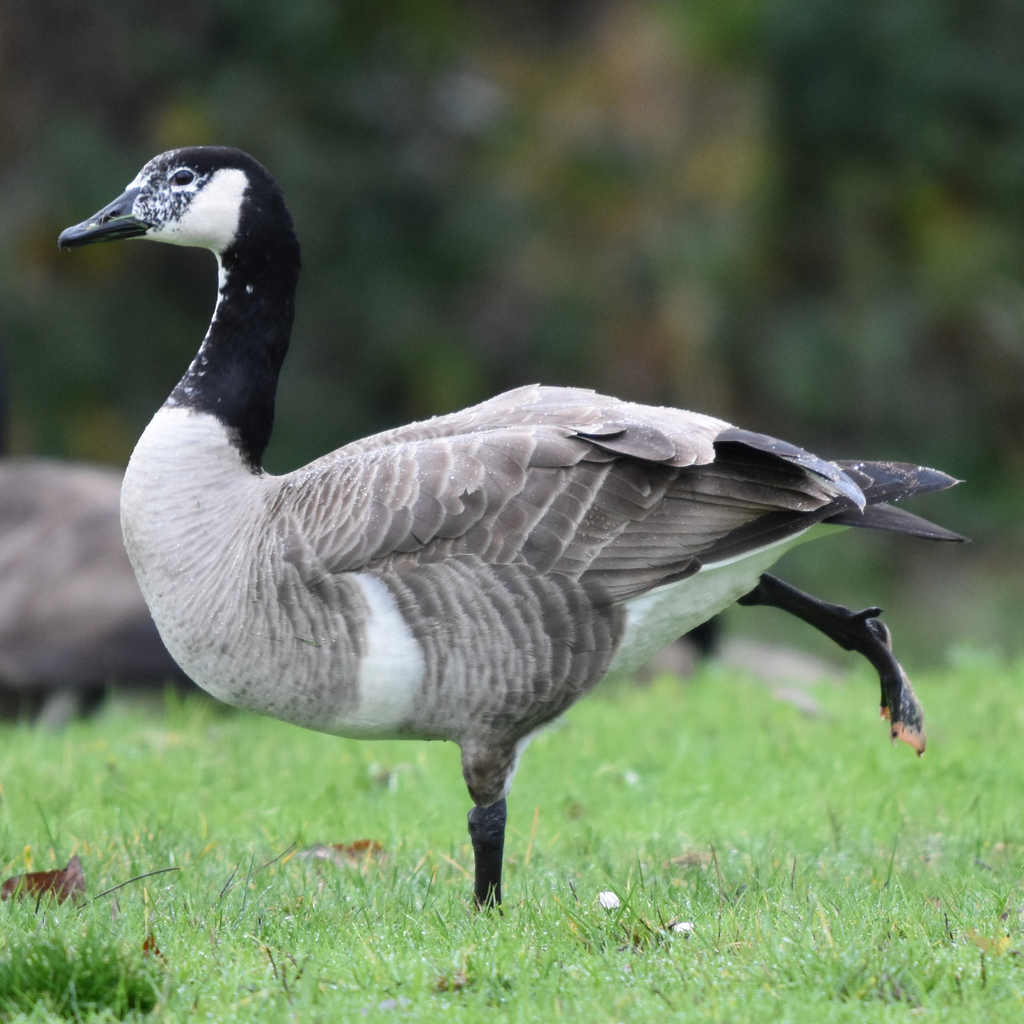
Canada Goose
Branta canadensis
Birdstrong against fish, reptiles
Common
Swoop
While active with another bird in play, it hits 6 harder on its first attack after entering play (12 with two others).
42

34
Canada Goose
Branta canadensis
Birdstrong against fish, reptiles
Common
While active with another bird in play, it hits 6 harder on its first attack after entering play (12 with two others).
Branta canadensis
Photo: © Tser (original photo) · CC BY 4.0 (licence text) · cropped
Strong against: it deals 20% more damage to them. Weak against: these types deal 20% more damage to it.
The Canada goose (Branta canadensis) is a large species of goose with a black head and neck, white cheeks, white under its chin, and a brown body. It is native to the Arctic and temperate regions of North America, and it is occasionally found during migration across the Atlantic in northern Europe. It has been introduced to France, the United Kingdom, Ireland, Scandinavia, New Zealand, Japan, Chile, Argentina, and the Falkland Islands. Like most geese, the Canada goose is primarily herbivorous and normally migratory; often found on or close to fresh water, the Canada goose is also common in brackish marshes, estuaries, and lagoons.
Adept at living in human-altered areas, Canada geese have established breeding colonies in urban and cultivated habitats, which provide food and have few natural predators. The success of this common park species has led to it often being considered a pest species. This is because of its excrement, its depredation of crops, its noise, its aggressive territorial behavior toward both humans and other animals, and its habit of stalking and begging for food. The last is a result of humans not following artificial feeding policies toward wild animals.
Excerpt from the Wikipedia article Canada goose, by its authors, under the CC BY-SA 4.0 licence.
Least Concern on the IUCN Red List: that’s what makes this card Common.
Every Common card has 100 points, shared between HP, ATK and DEF:
How they’re shared out:

 DEF 34