 …
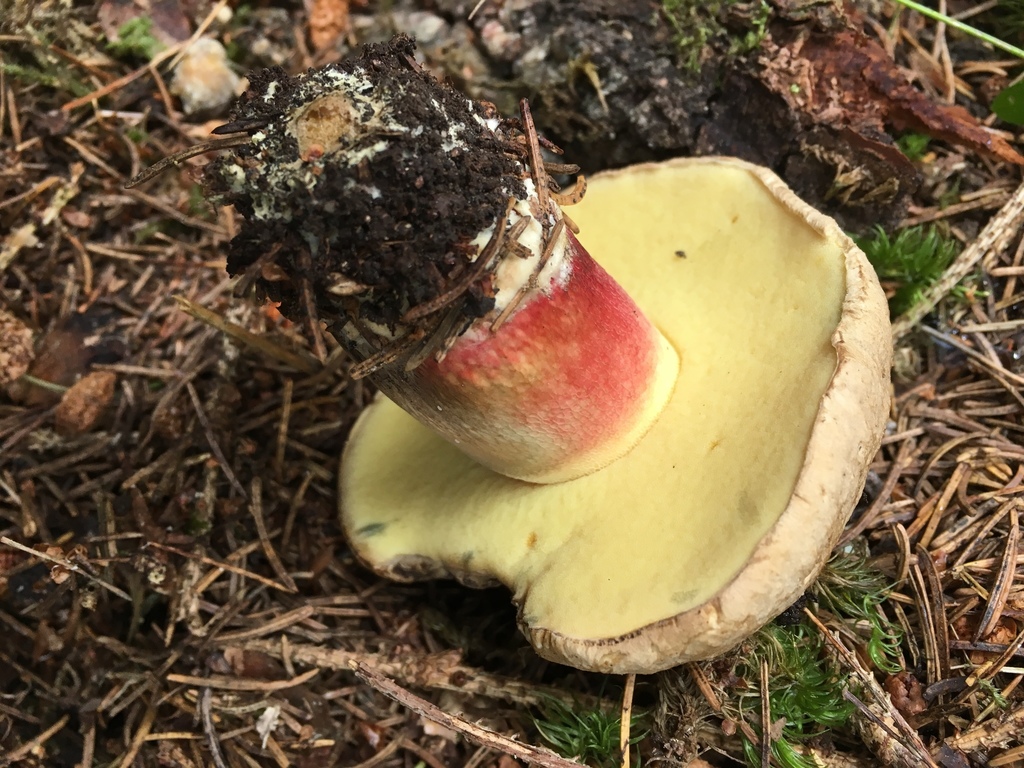
Bitter Beech Bolete
Caloboletus calopus
Fungusstrong against amphibians, reptiles
Common
Mycelium
While active with another fungus in play, it regains 5 HP at the start of your turn (8 with two others).
38

29
Bitter Beech Bolete
Caloboletus calopus
Fungusstrong against amphibians, reptiles
Common
While active with another fungus in play, it regains 5 HP at the start of your turn (8 with two others).
Caloboletus calopus
Photo: Sigrid Jakob (original photo) · CC0 (licence text) · cropped
Strong against: it deals 20% more damage to them. Weak against: these types deal 20% more damage to it.
Caloboletus calopus, commonly known as the bitter bolete, bitter beech bolete or scarlet-stemmed bolete, is a species of fungus in the bolete family. Christiaan Persoon first described Boletus calopus in 1801. Modern molecular phylogenetics showed that it was only distantly related to the type species of Boletus and required placement in a new genus; Caloboletus was erected in 2014, with C. calopus designated as the type species.
The stout fruit bodies are attractively coloured, with a beige to olive cap up to 15 cm (6 in) across, yellow pores, and a reddish stipe up to 15 cm (6 in) long and 5 cm (2 in) wide. The pale yellow flesh stains blue when broken or bruised. Its red stipe distinguishes it from Boletus edulis.
Appearing in coniferous and deciduous woodland in summer and autumn, the species is found in Eurasia and North America. Although not typically considered edible due to an intensely bitter taste that does not disappear with cooking, there are reports of it being consumed in eastern Europe.
Excerpt from the Wikipedia article Caloboletus calopus, by its authors, under the CC BY-SA 4.0 licence.
No global status on the IUCN Red List: that’s what makes this card Common.
Every Common card has 100 points, shared between HP, ATK and DEF:
How they’re shared out:

 DEF 29