 …
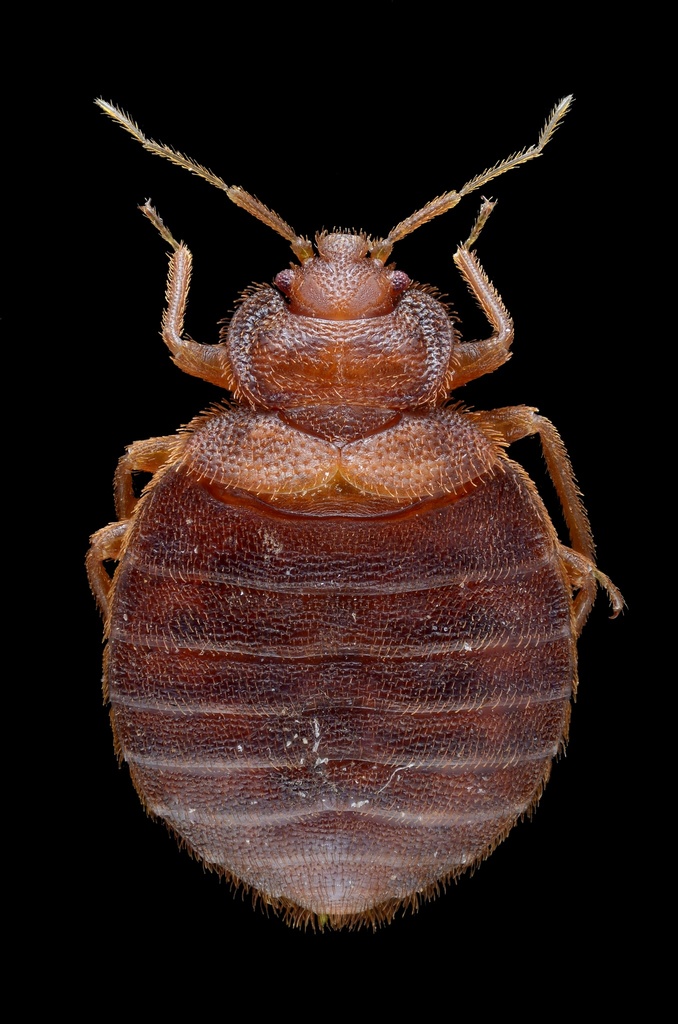
Common Bed Bug
Cimex lectularius
Insectstrong against fungi, fish
Common
Swarm
While active with another insect in play, each of its attacks also hits the opposing bench for 10, without knocking them out (20 with two others).
29

40
Common Bed Bug
Cimex lectularius
Insectstrong against fungi, fish
Common
While active with another insect in play, each of its attacks also hits the opposing bench for 10, without knocking them out (20 with two others).
Cimex lectularius
Photo: © Gilles San Martin (original photo) · CC BY-SA 4.0 (licence text) · cropped
Strong against: it deals 20% more damage to them. Weak against: these types deal 20% more damage to it.
Cimex lectularius, the common bedbug, is a species of Cimicidae. An ectoparasite, its primary hosts are humans. It is one of the world's major "nuisance pests".
Although bedbugs can be infected with at least 28 human pathogens, no studies have found that the insects are capable of transmitting any of these to humans. They have been found with methicillin-resistant Staphylococcus aureus (MRSA) and with vancomycin-resistant Enterococcus faecium (VRE), but the significance of this is still unknown.
Investigations into potential transmission of HIV, MRSA, hepatitis B, hepatitis C, and hepatitis E have not shown that bedbugs can spread these diseases. However, there is some evidence that arboviruses may be transmissible.
Bedbug bites (cimicosis) may lead to a range of skin manifestations from no visible effects to prominent blisters. Effects include skin rashes, psychological effects and allergic symptoms.
Excerpt from the Wikipedia article Cimex lectularius, by its authors, under the CC BY-SA 4.0 licence.
No global status on the IUCN Red List: that’s what makes this card Common.
Every Common card has 100 points, shared between HP, ATK and DEF:
How they’re shared out:

 DEF 40