 …
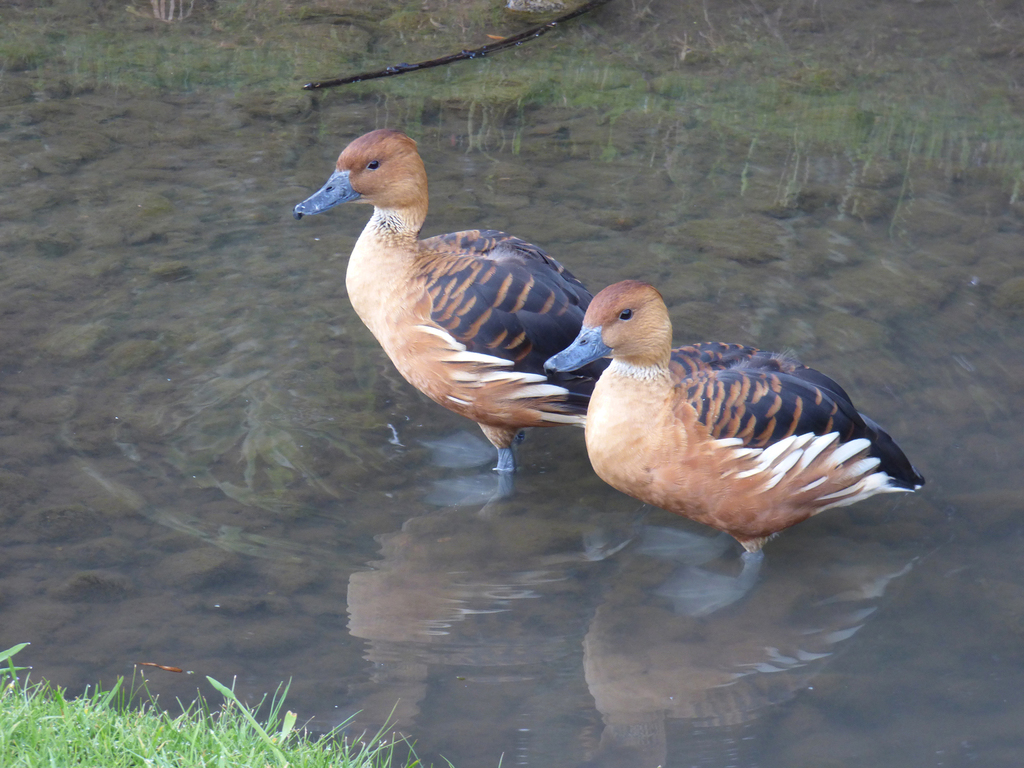
Fulvous Whistling-Duck
Dendrocygna bicolor
Birdstrong against fish, reptiles
Common
Swoop
While active with another bird in play, it hits 6 harder on its first attack after entering play (12 with two others).
41

36
Fulvous Whistling-Duck
Dendrocygna bicolor
Birdstrong against fish, reptiles
Common
While active with another bird in play, it hits 6 harder on its first attack after entering play (12 with two others).
Dendrocygna bicolor
Photo: © sandy-espinozaf (original photo) · CC BY 4.0 (licence text) · cropped
Strong against: it deals 20% more damage to them. Weak against: these types deal 20% more damage to it.
The fulvous whistling duck or fulvous tree duck (Dendrocygna bicolor) is a species of whistling duck that breeds across the world's tropical regions in much of Mexico and South America, the West Indies, the southern United States, sub-Saharan Africa and the Indian subcontinent. It has plumage that is mainly reddish brown, long legs and a long grey bill, and shows a distinctive white band across its black tail in flight. Like other members of its ancient lineage, it has a whistling call which is given in flight or on the ground. Its preferred habitat consists of wetlands with plentiful vegetation, including shallow lakes and paddy fields.
The nest, built from plant material and unlined, is placed among dense vegetation or in a tree hole. The typical clutch is around ten whitish eggs. The breeding adults, which pair for life, take turns to incubate, and the eggs hatch in 24–29 days. The downy grey ducklings leave the nest within a day or so of hatching, but the parents continue to protect them until they fledge around nine weeks later.
The fulvous whistling duck feeds in wetlands by day or night on seeds and other parts of plants. It is sometimes regarded as a pest of rice cultivation, and is also shot for food in parts of its range. Despite hunting, poisoning by pesticides and natural predation by mammals, birds, and reptiles, the large numbers and huge range of this duck mean that it is classified as least concern by the International Union for Conservation of Nature.
Excerpt from the Wikipedia article Fulvous whistling duck, by its authors, under the CC BY-SA 4.0 licence.
Least Concern on the IUCN Red List: that’s what makes this card Common.
Every Common card has 100 points, shared between HP, ATK and DEF:
How they’re shared out:

 DEF 36