 …
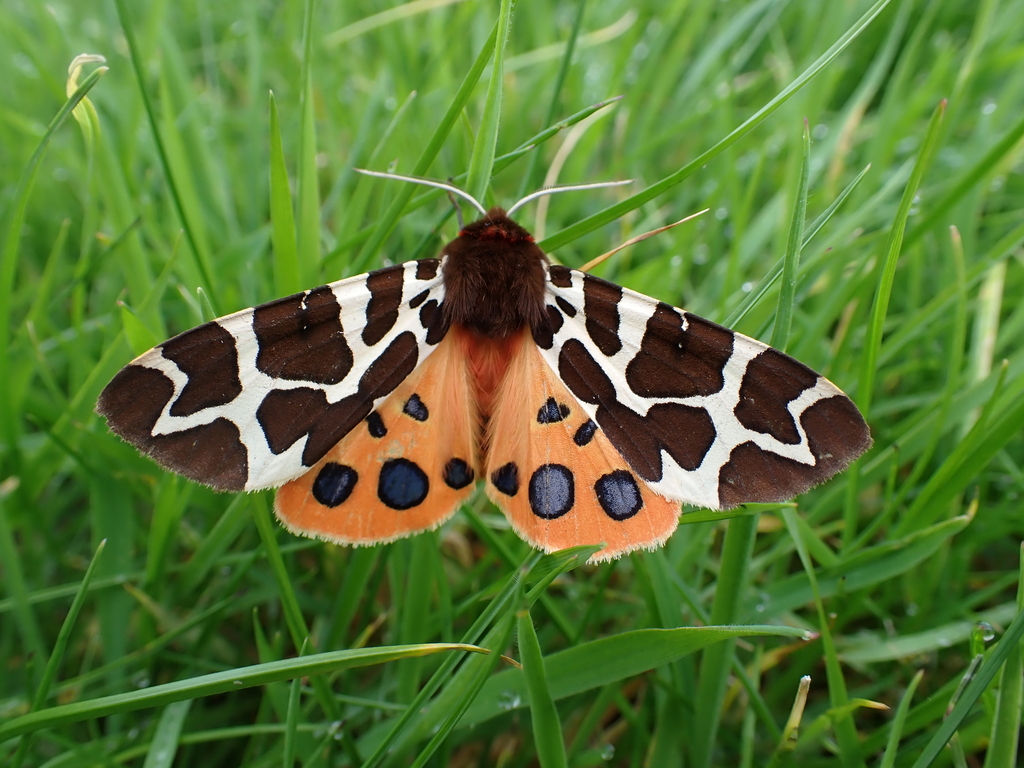
Garden Tiger
Arctia caja
Insectstrong against fungi, fish
Common
Swarm
While active with another insect in play, each of its attacks also hits the opposing bench for 10, without knocking them out (20 with two others).
40

39
Garden Tiger
Arctia caja
Insectstrong against fungi, fish
Common
While active with another insect in play, each of its attacks also hits the opposing bench for 10, without knocking them out (20 with two others).
Arctia caja
Photo: © carnifex (original photo) · CC BY 4.0 (licence text) · cropped
Strong against: it deals 20% more damage to them. Weak against: these types deal 20% more damage to it.
Arctia caja, the garden tiger moth or great tiger moth is a moth of the family Erebidae. Arctia caja is a northern species found in the US, Canada, and Europe. The moth prefers cold climates with temperate seasonality, as the larvae overwinter, and preferentially chooses host plants that produce pyrrolizidine alkaloids. However, garden tiger moths are generalists, and will pick many different plants to use as larval host plants.
The conspicuous patterns on its wings serve as a warning to predators because the moth's body fluids are poisonous. Their effects are not yet fully known, but these toxins contain quantities of neurotoxic choline esters which act by interfering with the acetylcholine receptor. The colours are also ideal for frightening predators such as small birds—the moth normally hides its hindwings under the cryptic forewings when resting. Between stored toxins, conspicuous warning coloration, and sound cues that are generated mostly as a response to bats, A. caja presents itself as an inedible target for predators.
Excerpt from the Wikipedia article Garden tiger moth, by its authors, under the CC BY-SA 4.0 licence.
No global status on the IUCN Red List: that’s what makes this card Common.
Every Common card has 100 points, shared between HP, ATK and DEF:
How they’re shared out:

 DEF 39