 …
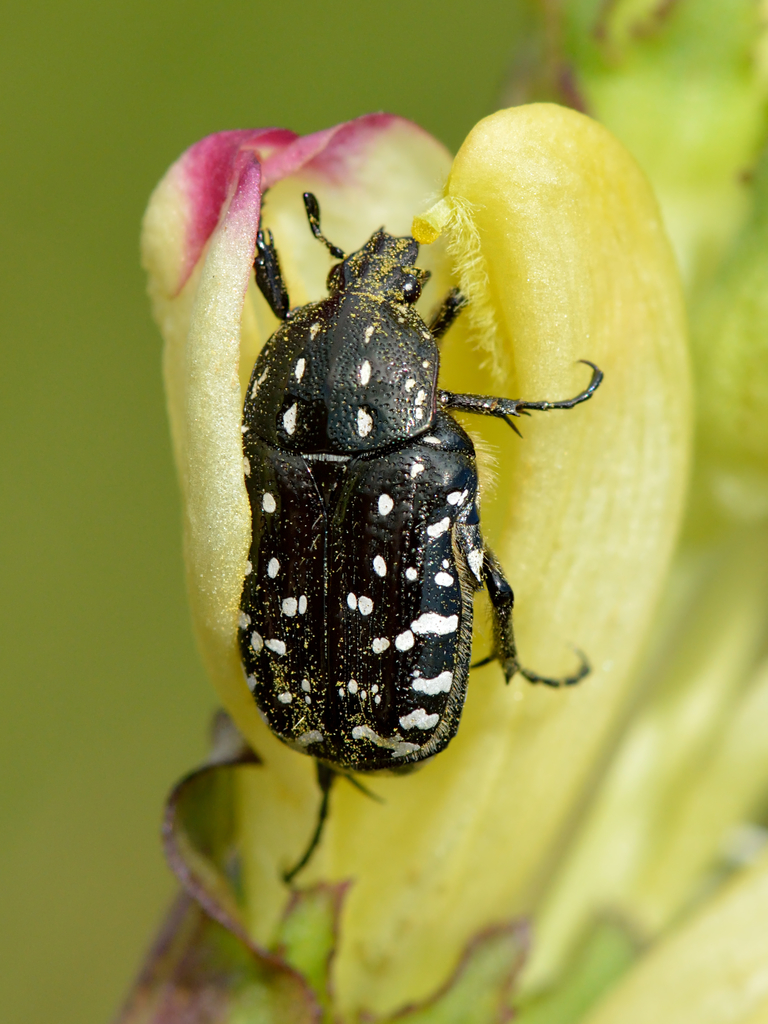
Mediterranean Spotted Chafer
Oxythyrea funesta
Insectstrong against fungi, fish
Common
Swarm
While active with another insect in play, each of its attacks also hits the opposing bench for 10, without knocking them out (20 with two others).
43

35
Mediterranean Spotted Chafer
Oxythyrea funesta
Insectstrong against fungi, fish
Common
While active with another insect in play, each of its attacks also hits the opposing bench for 10, without knocking them out (20 with two others).
Oxythyrea funesta
Photo: © Ivar Leidus (original photo) · CC BY-SA 4.0 (licence text) · cropped
Strong against: it deals 20% more damage to them. Weak against: these types deal 20% more damage to it.
Oxythyrea funesta is a phytophagous beetle species belonging to the family Cetoniidae, subfamily Cetoniinae. Its common name is "white spotted rose beetle".
This beetle is present in most of Europe, in the west Palearctic realm, and in the Near East. It is not present in North or South America.
Larvae are 16-22 mm long. They feed on dung, rotten wood, litter and soil and can remain until next spring in the soil.
The adults appear early in the spring, they grow up to 8–12 millimetres (0.31–0.47 in) and can mostly be encountered from May through July. They can be considered a pest since they feed not only on pollen, but also on floral organs, especially those in light colors.
Their colour is black, more or less bronzed. Most of the specimens show six white spots in two longitudinal rows on the pronotum and many others on the elytra. They are completely covered with white pubescence (easily visible in profile). Older specimens usually have no hairs, as they are rubbed off with time.
Excerpt from the Wikipedia article Oxythyrea funesta, by its authors, under the CC BY-SA 4.0 licence.
No global status on the IUCN Red List: that’s what makes this card Common.
Every Common card has 100 points, shared between HP, ATK and DEF:
How they’re shared out:

 DEF 35