 …
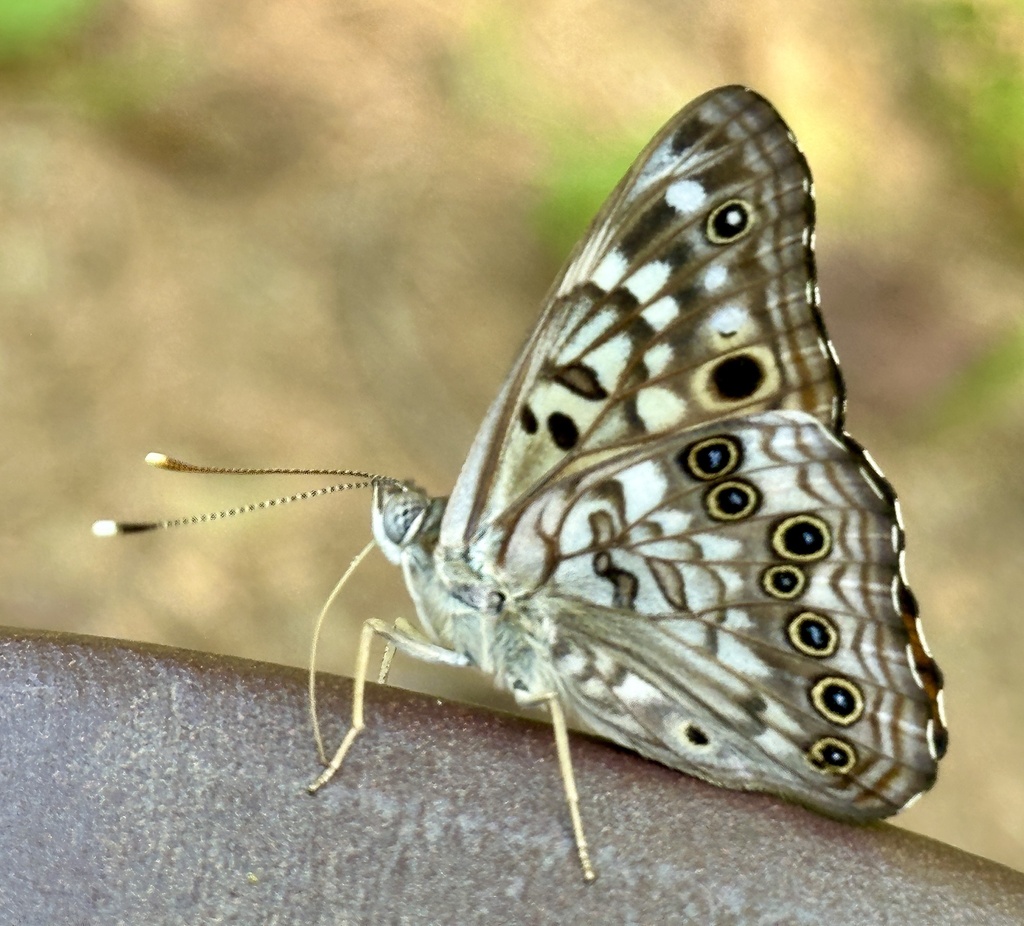
Hackberry Emperor
Asterocampa celtis
Insectstrong against fungi, fish
Common
Swarm
While active with another insect in play, each of its attacks also hits the opposing bench for 10, without knocking them out (20 with two others).
41

36
Hackberry Emperor
Asterocampa celtis
Insectstrong against fungi, fish
Common
While active with another insect in play, each of its attacks also hits the opposing bench for 10, without knocking them out (20 with two others).
Asterocampa celtis
Photo: iNaturalist (original photo) · CC0 (licence text) · cropped
Strong against: it deals 20% more damage to them. Weak against: these types deal 20% more damage to it.
Asterocampa celtis, the hackberry emperor, is a North American butterfly that belongs to the brushfooted butterfly family, Nymphalidae. It gets its name from the hackberry tree (Celtis occidentalis and others in the genus Celtis) upon which it lays its eggs. The hackberry tree is the only host plant for A. celtis and is the food source for larvae.
The hackberry emperor is known for being a quick, mercurial butterfly. It often is found along water sources and lowlands, although it lives in a broad range of habitats. Another notable characteristic is that it rarely is spotted visiting a flower, which is considered unusual for a butterfly.
Species in the genus Asterocampa are regarded as being "cheater" organisms, since these butterflies do not pollinate flowers when they feed from them. This species can more accurately be described as parasitizing their hosts and plant food sources since they extract nutrients without providing any benefits to the host.
As a member of the family Nymphalidae, the hackberry emperor oviposits its eggs in clutches, or clusters, upon hackberry leaves. There are a few plausible evolutionary reasons for this behavior, but the exact cause for this species' behavior is in contention. Possible explanations include higher fecundity that may be aided by aposematic coloration.
Excerpt from the Wikipedia article Asterocampa celtis, by its authors, under the CC BY-SA 4.0 licence.
No global status on the IUCN Red List: that’s what makes this card Common.
Every Common card has 100 points, shared between HP, ATK and DEF:
How they’re shared out:

 DEF 36