 …
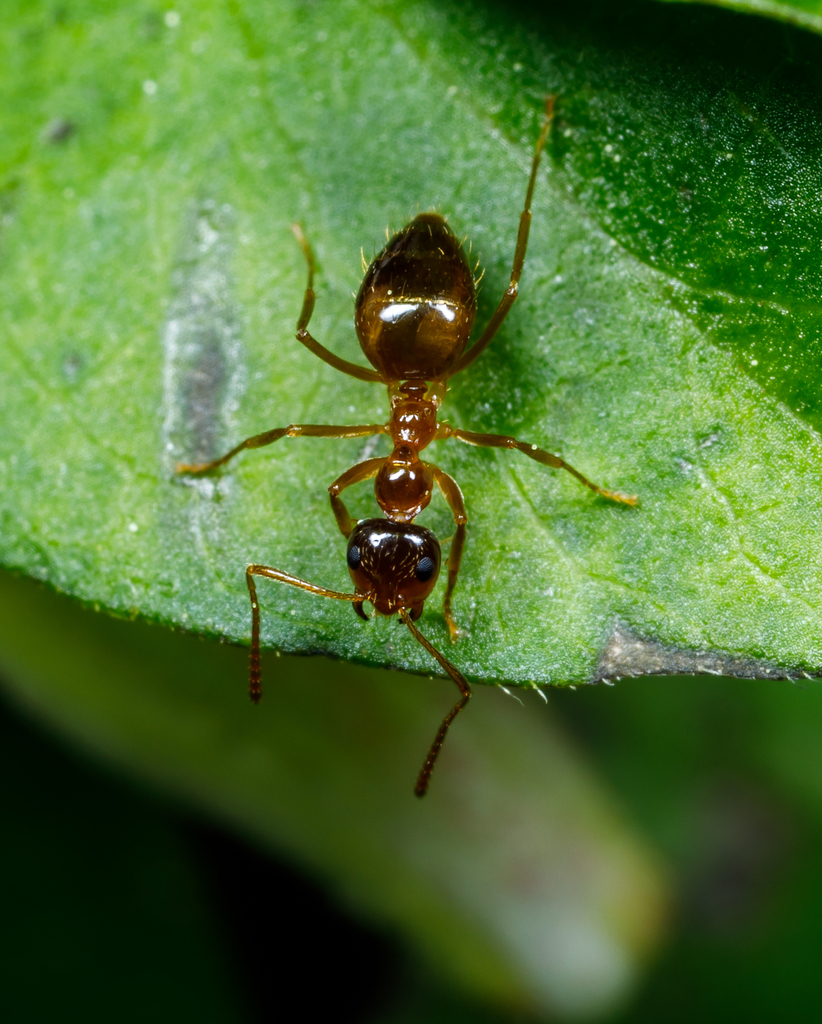
American Winter Ant
Prenolepis imparis
Insectstrong against fungi, fish
Common
Swarm
While active with another insect in play, each of its attacks also hits the opposing bench for 10, without knocking them out (20 with two others).
40

39
American Winter Ant
Prenolepis imparis
Insectstrong against fungi, fish
Common
While active with another insect in play, each of its attacks also hits the opposing bench for 10, without knocking them out (20 with two others).
Prenolepis imparis
Photo: © Meghan Cassidy (original photo) · CC BY-SA 4.0 (licence text) · cropped
Strong against: it deals 20% more damage to them. Weak against: these types deal 20% more damage to it.
Prenolepis imparis, commonly known as the winter ant, false honey ant, or false honeypot ant, is a species of ant in the genus Prenolepis. The species is found in North America, from Canada to Mexico, nesting deep within the ground. Unusual among ants, Prenolepis imparis prefers lower temperatures, including near freezing, and is only active outside the nest during winter and early spring. Prenolepis imparis enters a hibernation-like state called aestivation during the summer.
P. imparis secretes an opaque white liquid from its abdomen as a defense against other ants, including Linepithema humile. The defensive secretions appear to be derived anatomically from the Dufour's gland and has been shown to contain a mixture of alkanes and alkenes including hexadecene, octadecene, tetradecene, octylcyclohexane, and hexadecane. Secretions from P. imparis have experimentally been shown to often kill L. humile workers.
Excerpt from the Wikipedia article Prenolepis imparis, by its authors, under the CC BY-SA 4.0 licence.
No global status on the IUCN Red List: that’s what makes this card Common.
Every Common card has 100 points, shared between HP, ATK and DEF:
How they’re shared out:

 DEF 39