 …
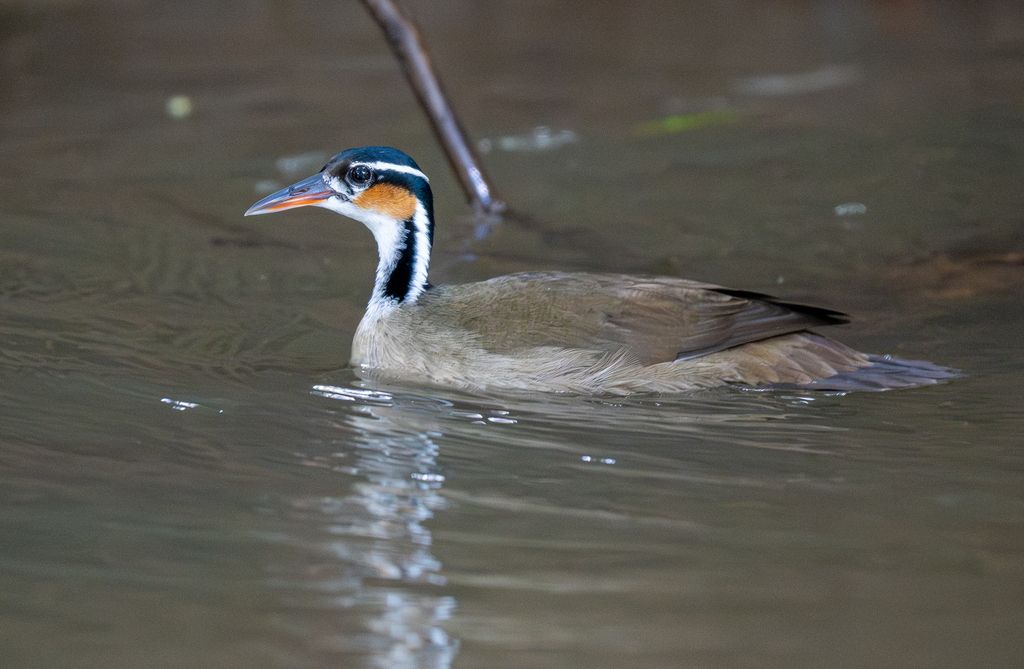
Sungrebe
Heliornis fulica
Birdstrong against fish, reptiles
Common
Swoop
While active with another bird in play, it hits 6 harder on its first attack after entering play (12 with two others).
30

38
Sungrebe
Heliornis fulica
Birdstrong against fish, reptiles
Common
While active with another bird in play, it hits 6 harder on its first attack after entering play (12 with two others).
Heliornis fulica
Photo: © Forest Botial-Jarvis (original photo) · CC BY 4.0 (licence text) · cropped
Strong against: it deals 20% more damage to them. Weak against: these types deal 20% more damage to it.
The sungrebe or American finfoot (Heliornis fulica) is a small aquatic gruiform found in the tropical and subtropical Americas from northeastern Mexico to central Ecuador and southern Brazil.
The sungrebe is now the only species placed in the genus Heliornis that was erected by the French naturalist Pierre Bonnaterre in 1791 with the sungrebe as the type species. The name of the genus combines the Ancient Greek hēlios meaning "sun" and ornis meaning "bird". The specific epithet fulica is Latin for "coot".
These waterfowl have broad lobes on their feet, convergent to that of grebes or coots, that they use to propel themselves in the water. They are reclusive birds, preferring well-covered slow-flowing streams and secluded waterways, sometimes swimming partly submerged, like an anhinga.
Sungrebes are unique among birds in that males have "pouches", folds of skin under their wings in which they carry their young from hatching until the chicks are able to swim for themselves. This has led to them being called "Marsupial Birds"; certain feathers, with their own musculature, serve as "guard rails" to prevent the baby from falling out.
Excerpt from the Wikipedia article Sungrebe, by its authors, under the CC BY-SA 4.0 licence.
Least Concern on the IUCN Red List: that’s what makes this card Common.
Every Common card has 100 points, shared between HP, ATK and DEF:
How they’re shared out:

 DEF 38