 …
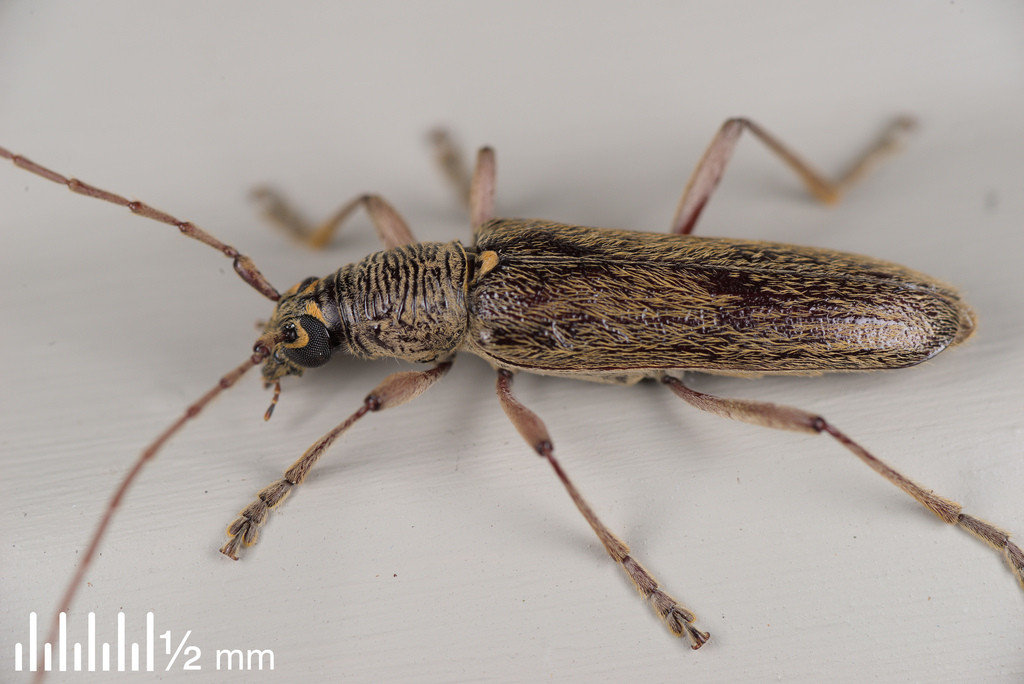
Lemon tree borer
Oemona hirta
Insectstrong against fungi, fish
Common
Swarm
While active with another insect in play, each of its attacks also hits the opposing bench for 10, without knocking them out (20 with two others).
37

39
Lemon tree borer
Oemona hirta
Insectstrong against fungi, fish
Common
While active with another insect in play, each of its attacks also hits the opposing bench for 10, without knocking them out (20 with two others).
Oemona hirta
Photo: © Jon Sullivan (original photo) · CC BY 4.0 (licence text) · cropped
Strong against: it deals 20% more damage to them. Weak against: these types deal 20% more damage to it.
Oemona hirta, the lemon tree borer, also known as the whistling beetle or the singing beetle, is a longhorn beetle endemic to New Zealand. Its larvae are generalist feeders, boring into the wood of a wide variety of trees, native and introduced. When citrus orchards were first established in New Zealand, this beetle started inflicting serious damage, and so gained the name "lemon tree borer". Four species within the genus Oemona have been identified, suggesting that more species could be found. When disturbed by predators or humans, the adult beetle stridulates creating a "rasp" or "squeak" sound by rubbing its thorax and head together against an area of thin ridges. Māori would eat a liquid called "pia manuka", which was produced by manuka trees when its wood was damaged by the larvae. When Captain Cook first arrived in NZ, his naturalists, Banks and Solander, collected a lemon tree borer in their first collection between 1769 and 1771. This oldest collected specimen can be found in the British Museum. A few years after the first collection, the species would be first described by the Danish naturalist Fabricius in 1775.
Excerpt from the Wikipedia article Oemona hirta, by its authors, under the CC BY-SA 4.0 licence.
No global status on the IUCN Red List: that’s what makes this card Common.
Every Common card has 100 points, shared between HP, ATK and DEF:
How they’re shared out:

 DEF 39