 …
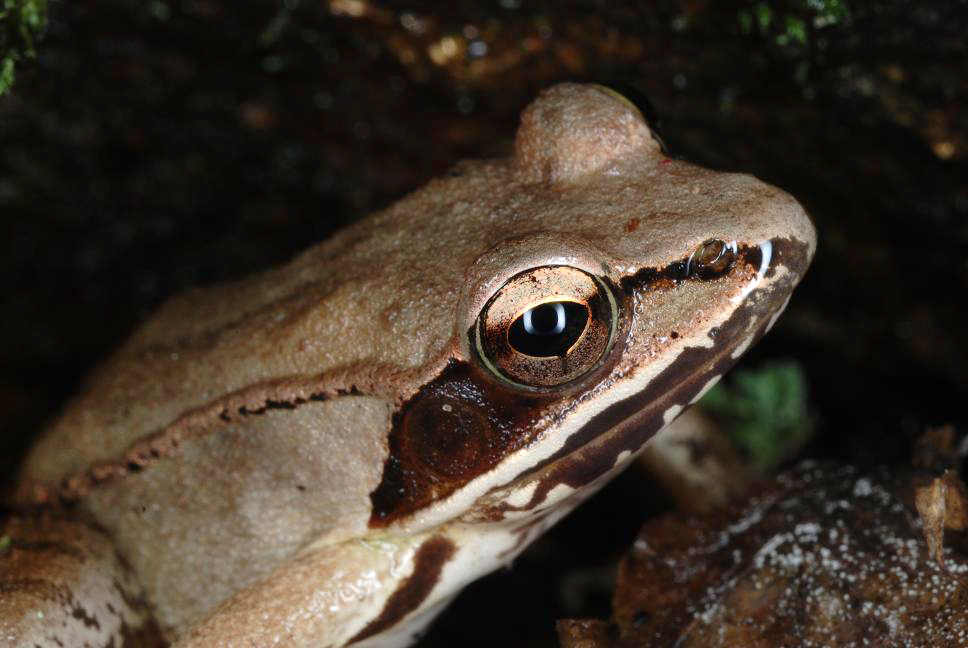
Wood Frog
Lithobates sylvaticus
Amphibianstrong against insects, arachnids
Common
Toxic skin
While active with another amphibian in play, any card that hits it loses 6 HP, without being knocked out (12 with two others).
37

35
Wood Frog
Lithobates sylvaticus
Amphibianstrong against insects, arachnids
Common
While active with another amphibian in play, any card that hits it loses 6 HP, without being knocked out (12 with two others).
Lithobates sylvaticus
Photo: © Douglas Goldman (original photo) · CC BY-SA 4.0 (licence text) · cropped
Strong against: it deals 20% more damage to them. Weak against: these types deal 20% more damage to it.
Lithobates sylvaticus or Rana sylvatica, commonly known as the wood frog, is a frog species that has a broad distribution over North America, extending from the boreal forest of the north to the southern Appalachians, with several notable disjunct populations including lowland eastern North Carolina. The wood frog has garnered attention from biologists because of its freeze tolerance, relatively great degree of terrestrialism (for a ranid), interesting habitat associations (peat bogs, vernal pools, uplands), and relatively long-range movements. It is the only North American frog that occurs north of the Arctic Circle.
The ecology and conservation of the wood frog has attracted research attention in recent years because they are often considered "obligate" breeders in ephemeral wetlands (sometimes called "vernal pools"), which are themselves more imperiled than the species that breed in them. The wood frog has been proposed to be the official state amphibian of New York.
Excerpt from the Wikipedia article Wood frog, by its authors, under the CC BY-SA 4.0 licence.
Least Concern on the IUCN Red List: that’s what makes this card Common.
Every Common card has 100 points, shared between HP, ATK and DEF:
How they’re shared out:

 DEF 35