 …
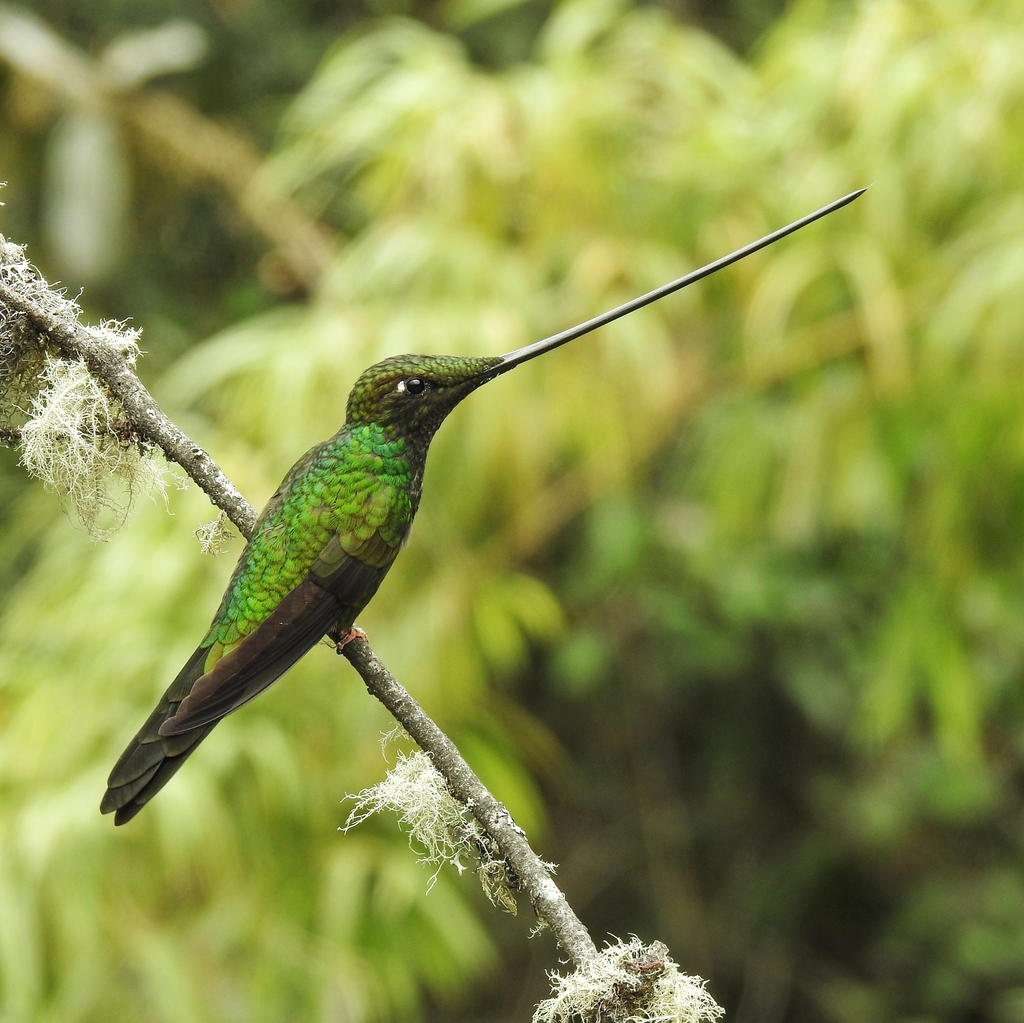
Sword-billed Hummingbird
Ensifera ensifera
Birdstrong against fish, reptiles
Common
Swoop
While active with another bird in play, it hits 6 harder on its first attack after entering play (12 with two others).
40

40
Sword-billed Hummingbird
Ensifera ensifera
Birdstrong against fish, reptiles
Common
While active with another bird in play, it hits 6 harder on its first attack after entering play (12 with two others).
Ensifera ensifera
Photo: © Esteban Poveda (original photo) · CC BY 4.0 (licence text) · cropped
Strong against: it deals 20% more damage to them. Weak against: these types deal 20% more damage to it.
The sword-billed hummingbird (Ensifera ensifera), also known as the swordbill, is a neotropical species of hummingbird from the Andean regions of South America. It is the only member in the genus Ensifera. Among the largest species of hummingbird, it is characterized by its unusually long bill, being the only bird to have a beak longer than the rest of its body, excluding the tail. It uses its bill to drink nectar from flowers with long corollas and has coevolved with the species Passiflora mixta. While most hummingbirds preen using their bills, the sword-billed hummingbird uses its feet to scratch and preen due to its bill being so long.
The sword-billed hummingbird is a trap-line feeder and feeds on nectar, especially from Passiflora mixta and other passionflowers. It also hawks for insects. It breeds from February to March and builds cup nests using moss. The sword-billed hummingbird is listed as being of least concern by the International Union for Conservation of Nature (IUCN) on the IUCN Red List, but is threatened by climate change and deforestation.
Excerpt from the Wikipedia article Sword-billed hummingbird, by its authors, under the CC BY-SA 4.0 licence.
Least Concern on the IUCN Red List: that’s what makes this card Common.
Every Common card has 100 points, shared between HP, ATK and DEF:
How they’re shared out:

 DEF 40