 …
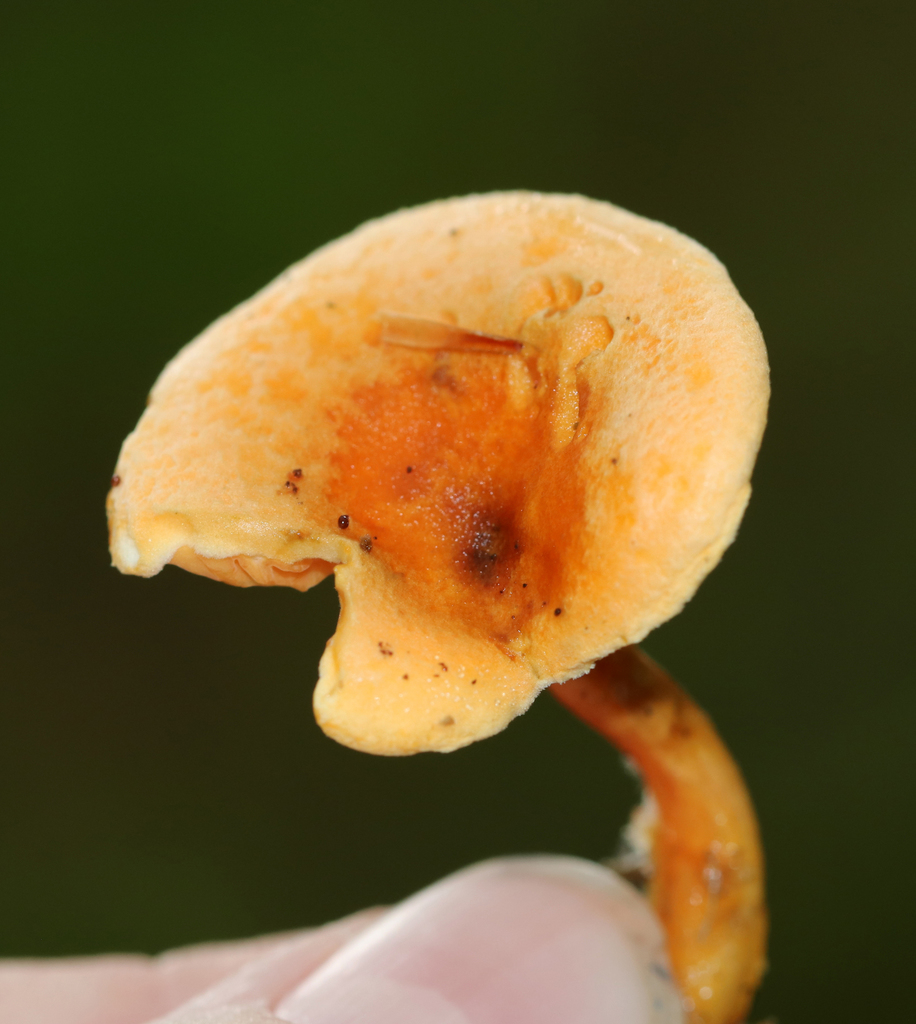
False Chanterelle
Hygrophoropsis aurantiaca
Fungusstrong against amphibians, reptiles
Common
Mycelium
While active with another fungus in play, it regains 5 HP at the start of your turn (8 with two others).
41

28
False Chanterelle
Hygrophoropsis aurantiaca
Fungusstrong against amphibians, reptiles
Common
While active with another fungus in play, it regains 5 HP at the start of your turn (8 with two others).
Hygrophoropsis aurantiaca
Photo: © Christine Young (original photo) · CC BY 4.0 (licence text) · cropped
Strong against: it deals 20% more damage to them. Weak against: these types deal 20% more damage to it.
Hygrophoropsis aurantiaca, commonly known as the false chanterelle, is a species of fungus in the family Hygrophoropsidaceae.
Austrian naturalist Franz Xaver von Wulfen described the false chanterelle in 1781, noting both its resemblance with the true chanterelles and people's propensity to confuse them. The false chanterelle was then placed in the genus Clitocybe, but it was later observed that its forked gills and dextrinoid spores indicated a relationship to Paxillus. Genetic analysis has confirmed that it belongs to the order Boletales and is more closely related to boletes.
The fruit bodies (mushrooms) are yellow–orange, with a funnel-shaped cap up to 8 cm (3 in) across that has a felt-like surface. The thin, often forked gills on the underside of the cap run partway down the length of the otherwise smooth stipe. The species is found across several continents, growing in woodland and heathland, and sometimes on woodchips used in gardening and landscaping. Reports on the mushroom's edibility vary; it is considered poisonous, but has historically been eaten in parts of Europe and the Americas.
Excerpt from the Wikipedia article Hygrophoropsis aurantiaca, by its authors, under the CC BY-SA 4.0 licence.
No global status on the IUCN Red List: that’s what makes this card Common.
Every Common card has 100 points, shared between HP, ATK and DEF:
How they’re shared out:

 DEF 28