 …
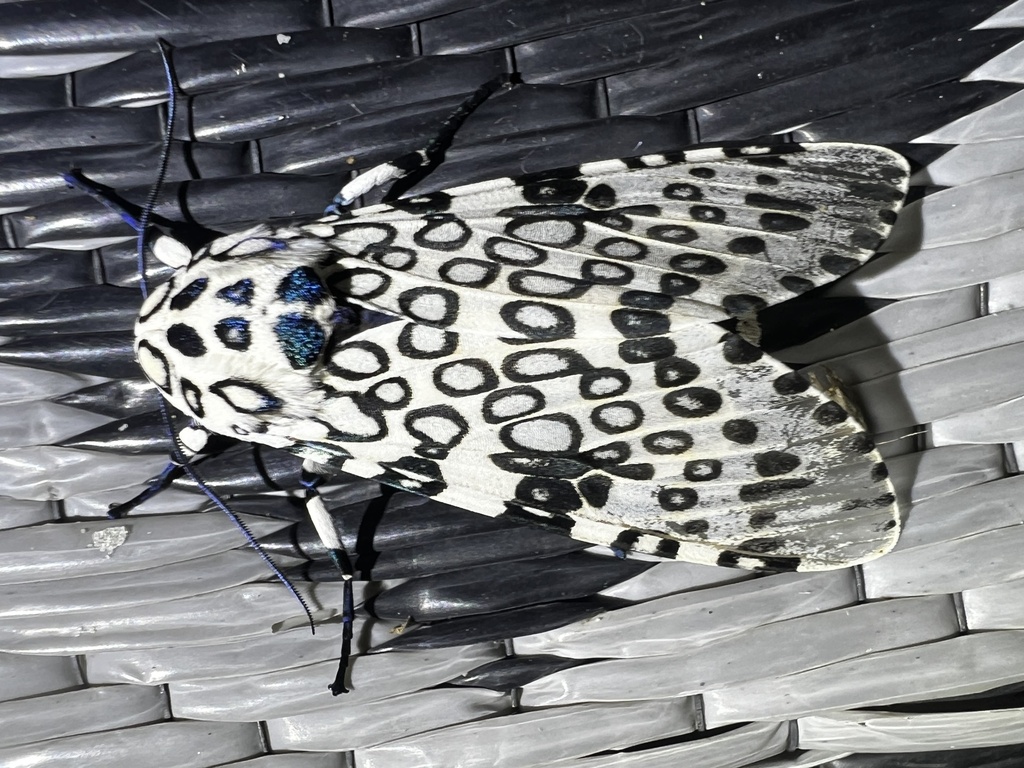
Giant Leopard Moth
Hypercompe scribonia
Insectstrong against fungi, fish
Common
Swarm
While active with another insect in play, each of its attacks also hits the opposing bench for 10, without knocking them out (20 with two others).
42

36
Giant Leopard Moth
Hypercompe scribonia
Insectstrong against fungi, fish
Common
While active with another insect in play, each of its attacks also hits the opposing bench for 10, without knocking them out (20 with two others).
Hypercompe scribonia
Photo: © Nick Tobler (Cowturtle) (original photo) · CC BY 4.0 (licence text) · cropped
Strong against: it deals 20% more damage to them. Weak against: these types deal 20% more damage to it.
The giant leopard moth (Hypercompe scribonia) is a moth of the family Erebidae. They are distributed through North America from southern Ontario, and southern and eastern United States through New England, Mexico, and south to Colombia. The obsolete name, Ecpantheria scribonia, is still occasionally encountered.
They are known to be attracted to bitter, unripe vegetables and broccoli flowers.
This moth species has a wingspan of 76 mm (3 in). Its wings are bright white with a pattern of neat black blotches, some solid and some hollow. The overside of the abdomen is dark blue with orange markings, while the underside is white with solid black spots, and males have a narrow yellow line on the sides. Their legs have black and white bands. Adult moths are strictly nocturnal and do not generally fly before nightfall.
Abridged excerpt from the Wikipedia article Giant leopard moth, by its authors, under the CC BY-SA 4.0 licence.
No global status on the IUCN Red List: that’s what makes this card Common.
Every Common card has 100 points, shared between HP, ATK and DEF:
How they’re shared out:

 DEF 36