 …
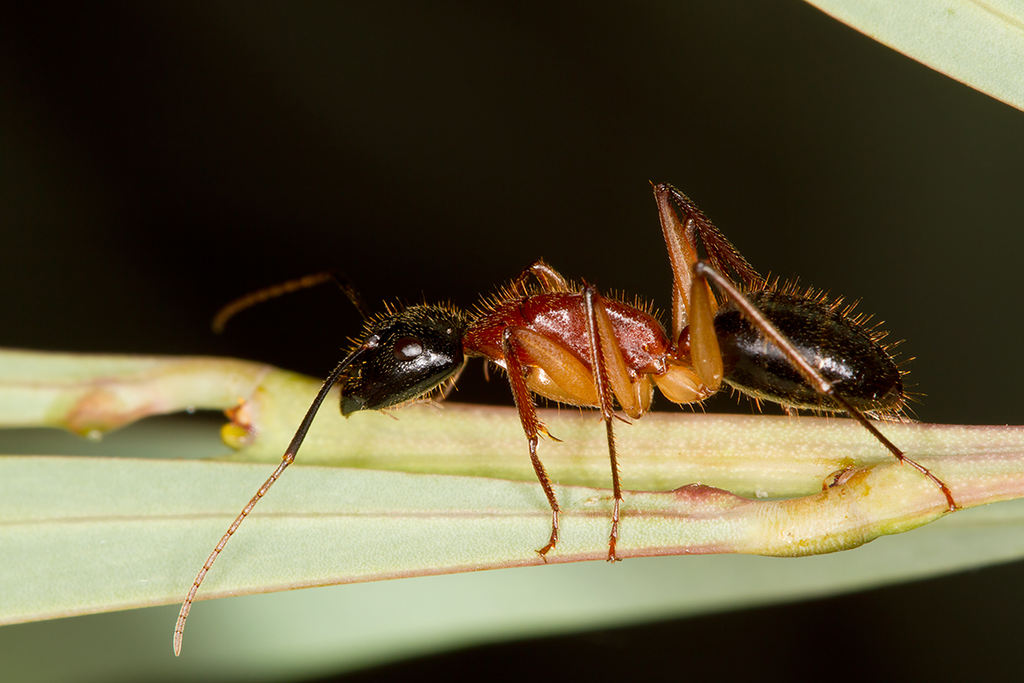
Black-headed Sugar Ant
Camponotus nigriceps
Insectstrong against fungi, fish
Common
Swarm
While active with another insect in play, each of its attacks also hits the opposing bench for 10, without knocking them out (20 with two others).
29

39
Black-headed Sugar Ant
Camponotus nigriceps
Insectstrong against fungi, fish
Common
While active with another insect in play, each of its attacks also hits the opposing bench for 10, without knocking them out (20 with two others).
Camponotus nigriceps
Photo: © Patrick_K59 (original photo) · CC BY 4.0 (licence text) · cropped
Strong against: it deals 20% more damage to them. Weak against: these types deal 20% more damage to it.
The black-headed sugar ant (Camponotus nigriceps), also known as the brown sugar ant, is a species of Formicinae ant endemic to Australia. Found throughout most states, the species is a member of the genus Camponotus, a cosmopolitan genus of ants commonly known as carpenter ants. It was formally described and named by British entomologist Frederick Smith in 1858. These ants are characterised by their black head, reddish-brown mesosoma and black gaster, which can change in colour.
The species is polymorphic: workers and soldiers measure 6 to 12 millimetres (0.24 to 0.47 in) and males are 12 millimetres (0.47 in). The queens are the largest members of the colony, measuring 16 millimetres (0.63 in). Colonies dwell in dry regions, including open areas or in dry sclerophyll woodland, where they nest in soil, large mounds or under stones. Nuptial flight occurs in summer and nests can hold several thousand individuals. Considered a household pest, black-headed sugar ants feed on sweet foods and insects and tend to butterfly larvae. Numerous birds and fish prey on these ants.
Excerpt from the Wikipedia article Black-headed sugar ant, by its authors, under the CC BY-SA 4.0 licence.
No global status on the IUCN Red List: that’s what makes this card Common.
Every Common card has 100 points, shared between HP, ATK and DEF:
How they’re shared out:

 DEF 39