 …
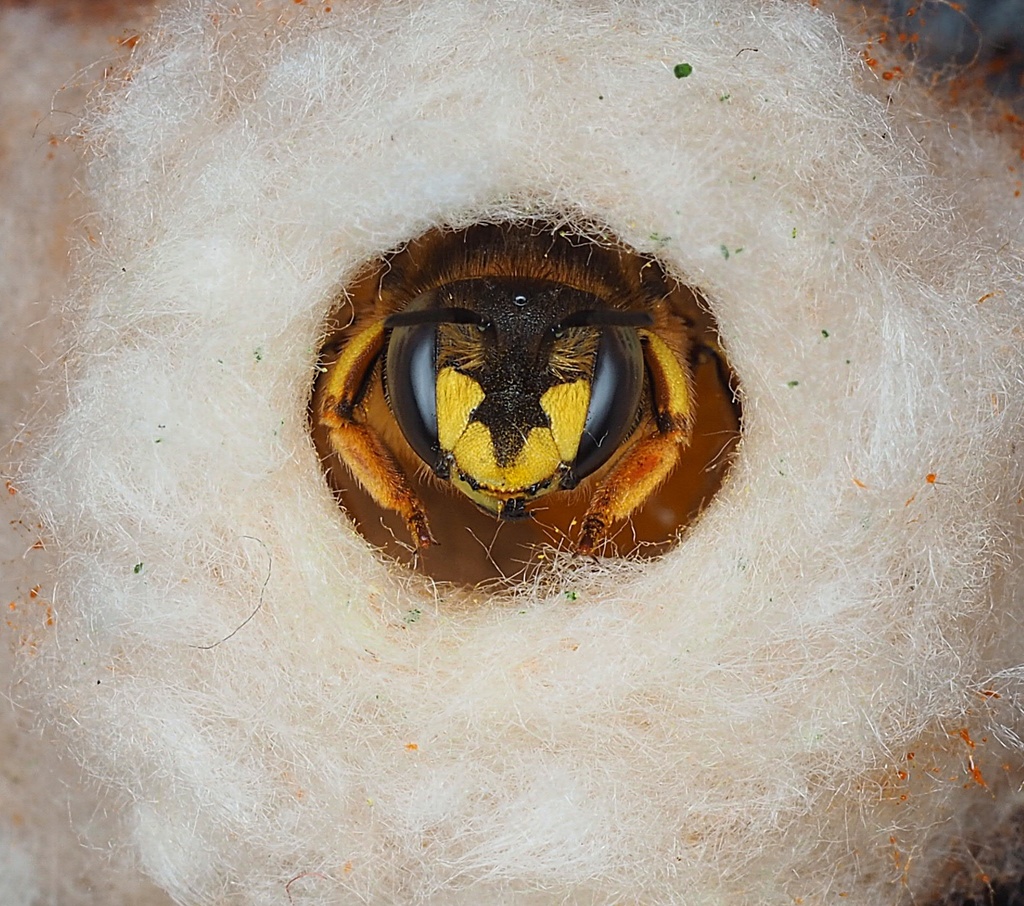
European Woolcarder Bee
Anthidium manicatum
Insectstrong against fungi, fish
Common
Swarm
While active with another insect in play, each of its attacks also hits the opposing bench for 10, without knocking them out (20 with two others).
41

38
European Woolcarder Bee
Anthidium manicatum
Insectstrong against fungi, fish
Common
While active with another insect in play, each of its attacks also hits the opposing bench for 10, without knocking them out (20 with two others).
Anthidium manicatum
Photo: © Tom (original photo) · CC BY 4.0 (licence text) · cropped
Strong against: it deals 20% more damage to them. Weak against: these types deal 20% more damage to it.
Anthidium manicatum, commonly called the European wool carder bee, is a species of bee in the family Megachilidae, the leaf-cutter bees and mason bees.
They get the name "carder" from their behaviour of scraping hair from leaves such as lamb's ears (Stachys byzantina), similar to the way textile workers card fibers. They carry this hair bundled beneath their bodies to be used as a nest lining. Like other members of the tribe Anthidiini, these bees do not cut leaves or petals as is typical for megachilids. The males engage in territorial behaviour, aggressively chasing other males and pollinators from their territory.
This bee is native to Europe, Asia, and North Africa. It was accidentally introduced into North America from Europe some time in the mid-20th century, first seen in 1963 near Ithaca, New York, and has become an invasive pest. It is now also found in regions of South America, New Zealand, and the Canary Islands. They are generalists, and do not seem to prefer any plant genera for foraging, although in New Zealand, native plants are visited less frequently.
Excerpt from the Wikipedia article Anthidium manicatum, by its authors, under the CC BY-SA 4.0 licence.
No global status on the IUCN Red List: that’s what makes this card Common.
Every Common card has 100 points, shared between HP, ATK and DEF:
How they’re shared out:

 DEF 38