 …
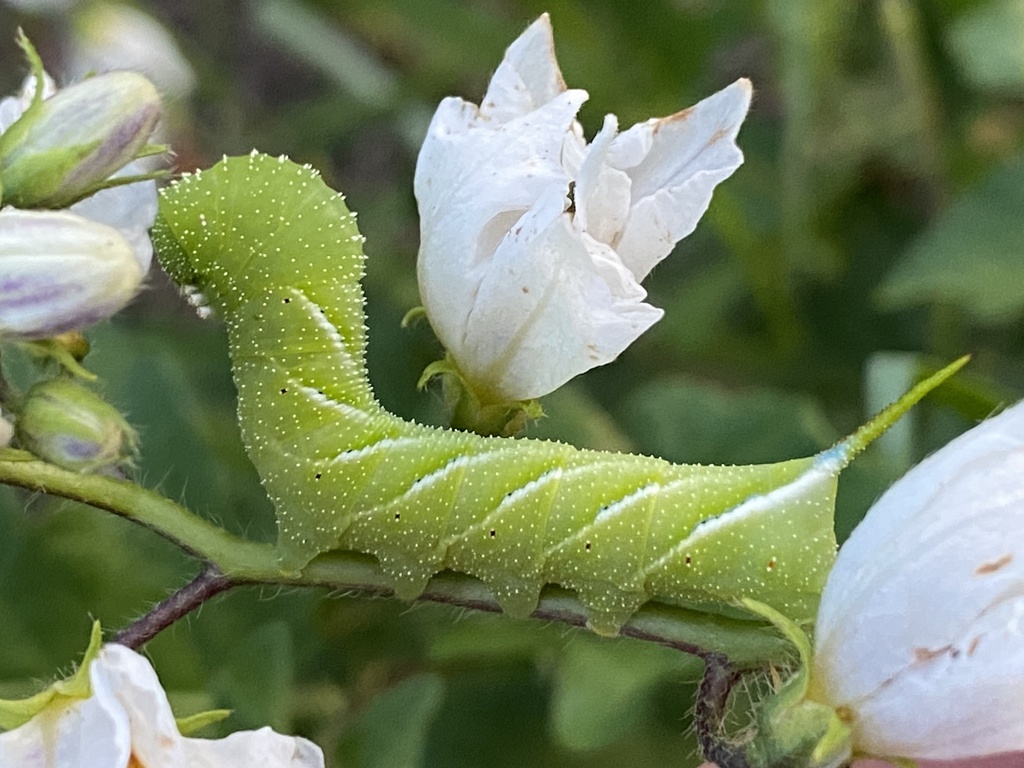
Carolina Sphinx
Manduca sexta
Insectstrong against fungi, fish
Common
Swarm
While active with another insect in play, each of its attacks also hits the opposing bench for 10, without knocking them out (20 with two others).
41

34
Carolina Sphinx
Manduca sexta
Insectstrong against fungi, fish
Common
While active with another insect in play, each of its attacks also hits the opposing bench for 10, without knocking them out (20 with two others).
Manduca sexta
Photo: iNaturalist (original photo) · CC0 (licence text) · cropped
Strong against: it deals 20% more damage to them. Weak against: these types deal 20% more damage to it.
Manduca sexta is a moth of the family Sphingidae present through much of the Americas. The species was first described by Carl Linnaeus in his 1763 Centuria Insectorum.
Commonly known as the Carolina sphinx moth and the tobacco hawk moth (as adults) and the tobacco hornworm and the Goliath worm (as larvae), it is closely related to and often confused with the very similar tomato hornworm (Manduca quinquemaculata); the larvae of both feed on the foliage of various plants of the family Solanaceae. The larvae of these species can be distinguished by their lateral markings: tomato hornworms have eight V-shaped white markings with no borders, while tobacco hornworms have seven white diagonal lines with a black border. Additionally, tobacco hornworms have red horns, while tomato hornworms have dark blue or black horns. A mnemonic to remember the markings is tobacco hornworms have straight white lines like cigarettes, while tomato hornworms have V-shaped markings (as in "vine-ripened" tomatoes). M. sexta has mechanisms for selectively sequestering and secreting the neurotoxin nicotine present in tobacco.
Abridged excerpt from the Wikipedia article Manduca sexta, by its authors, under the CC BY-SA 4.0 licence.
No global status on the IUCN Red List: that’s what makes this card Common.
Every Common card has 100 points, shared between HP, ATK and DEF:
How they’re shared out:

 DEF 34