 …
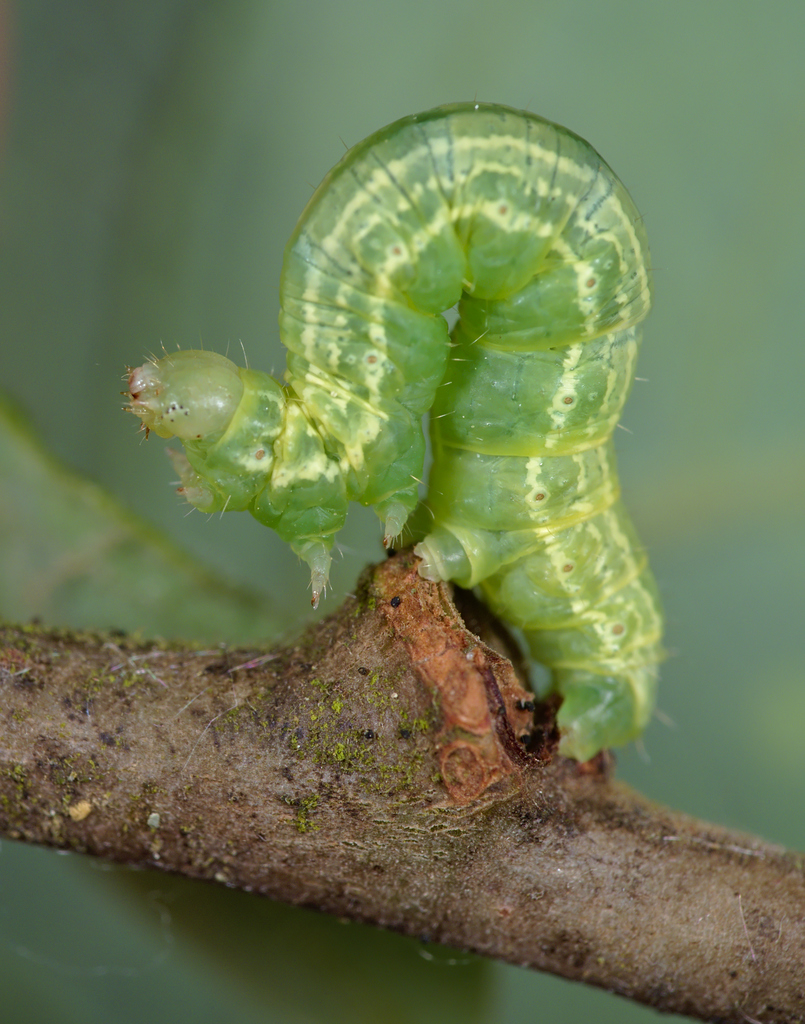
Winter Moth
Operophtera brumata
Insectstrong against fungi, fish
Common
Swarm
While active with another insect in play, each of its attacks also hits the opposing bench for 10, without knocking them out (20 with two others).
40

39
Winter Moth
Operophtera brumata
Insectstrong against fungi, fish
Common
While active with another insect in play, each of its attacks also hits the opposing bench for 10, without knocking them out (20 with two others).
Operophtera brumata
Photo: © Gilles San Martin (original photo) · CC BY-SA 4.0 (licence text) · cropped
Strong against: it deals 20% more damage to them. Weak against: these types deal 20% more damage to it.
The winter moth (Operophtera brumata) is a moth of the family Geometridae. It is an abundant species in Europe and the Near East and a famous study organism for evaluating insect population dynamics. It is one of very few lepidopterans of temperate regions in which adults are active in late autumn and early winter. The females of this species are virtually wingless and cannot fly, but the males are fully winged and fly strongly. After the initial frosts of late fall, the females emerge from their pupae, walk to and up trees and emit pheromones in the evening to attract males. After fertilization, they ascend to lay, on average, around 100 eggs each. Typically, the larger the female moth is, the more eggs she lays.
The winter moth is considered an invasive species in North America. Nova Scotia, Canada, experienced the first confirmed infestations in the 1930s. It was later accidentally introduced to Oregon in the 1950s and the Vancouver area of British Columbia around 1970. Defoliation by the moth was first noted in eastern states of the United States in the late 1990s, and is now well established in Massachusetts, Rhode Island, New Hampshire and Maine. The winter moth is confirmed present in British Columbia, Washington and Oregon. In Massachusetts, the moths have attracted the attention of several media outlets due to the severity of the infestation. Efforts at biological control are underway.
Excerpt from the Wikipedia article Winter moth, by its authors, under the CC BY-SA 4.0 licence.
No global status on the IUCN Red List: that’s what makes this card Common.
Every Common card has 100 points, shared between HP, ATK and DEF:
How they’re shared out:

 DEF 39