 …
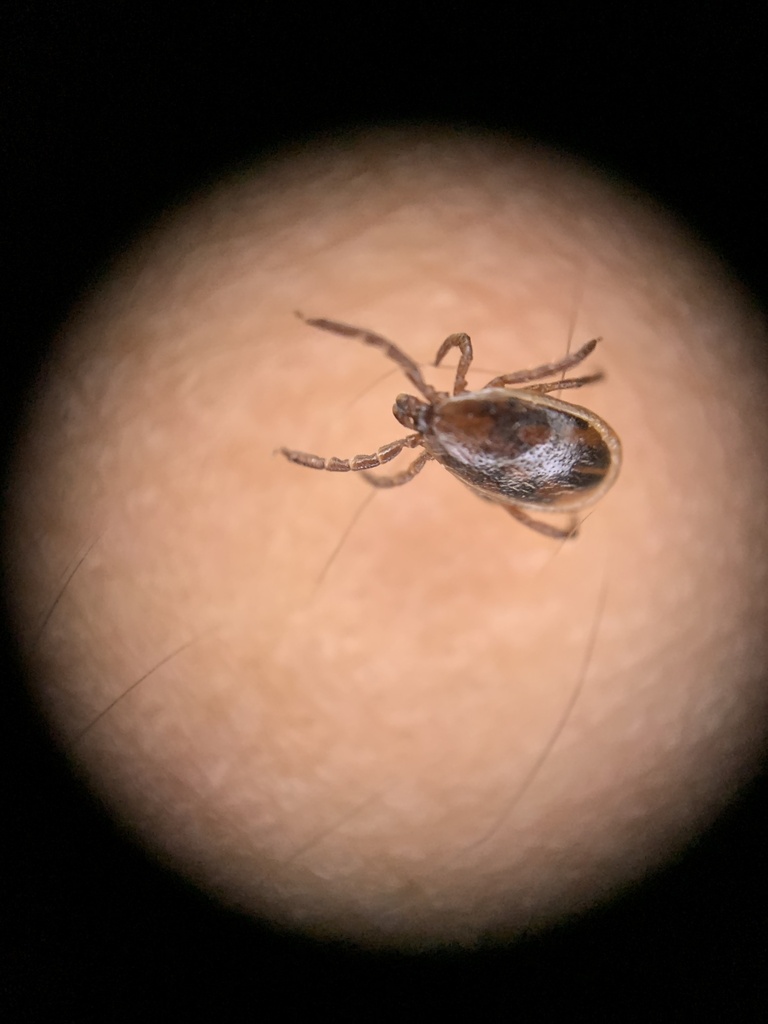
Eastern Black-legged Tick
Ixodes scapularis
Arachnidstrong against insects, birds
Common
Venom
While active with another arachnid in play, its target loses 4 HP at the start of each of its turns, as long as it stays active (7 with two others).
39

28
Eastern Black-legged Tick
Ixodes scapularis
Arachnidstrong against insects, birds
Common
While active with another arachnid in play, its target loses 4 HP at the start of each of its turns, as long as it stays active (7 with two others).
Ixodes scapularis
Photo: © Senna Bryce Robeson (original photo) · CC BY 4.0 (licence text) · cropped
Strong against: it deals 20% more damage to them. Weak against: these types deal 20% more damage to it.
Ixodes scapularis is a hard-bodied tick found in much of the eastern half of North America. Its common name is the black-legged tick, although it is sometimes known by the misnomer deer tick because its adult life stages frequently feed on white-tailed deer. In 1979, ticks found associated with Babesiosis in the northeastern US were given the scientific name Ixodes dammini and the common name deer tick. In 1993, it was shown that Ixodes dammini was the same as a previously identified species, Ixodes scapularis, from the southeastern US, which already had the common name black-legged tick.
The black-legged tick is a vector for several diseases: Lyme disease, babesiosis, anaplasmosis, and Powassan virus disease. It is also known to parasitize mice, lizards, migratory birds, etc. especially while the tick is in the larval or nymphal stage.
Excerpt from the Wikipedia article Ixodes scapularis, by its authors, under the CC BY-SA 4.0 licence.
No global status on the IUCN Red List: that’s what makes this card Common.
Every Common card has 100 points, shared between HP, ATK and DEF:
How they’re shared out:

 DEF 28