 …
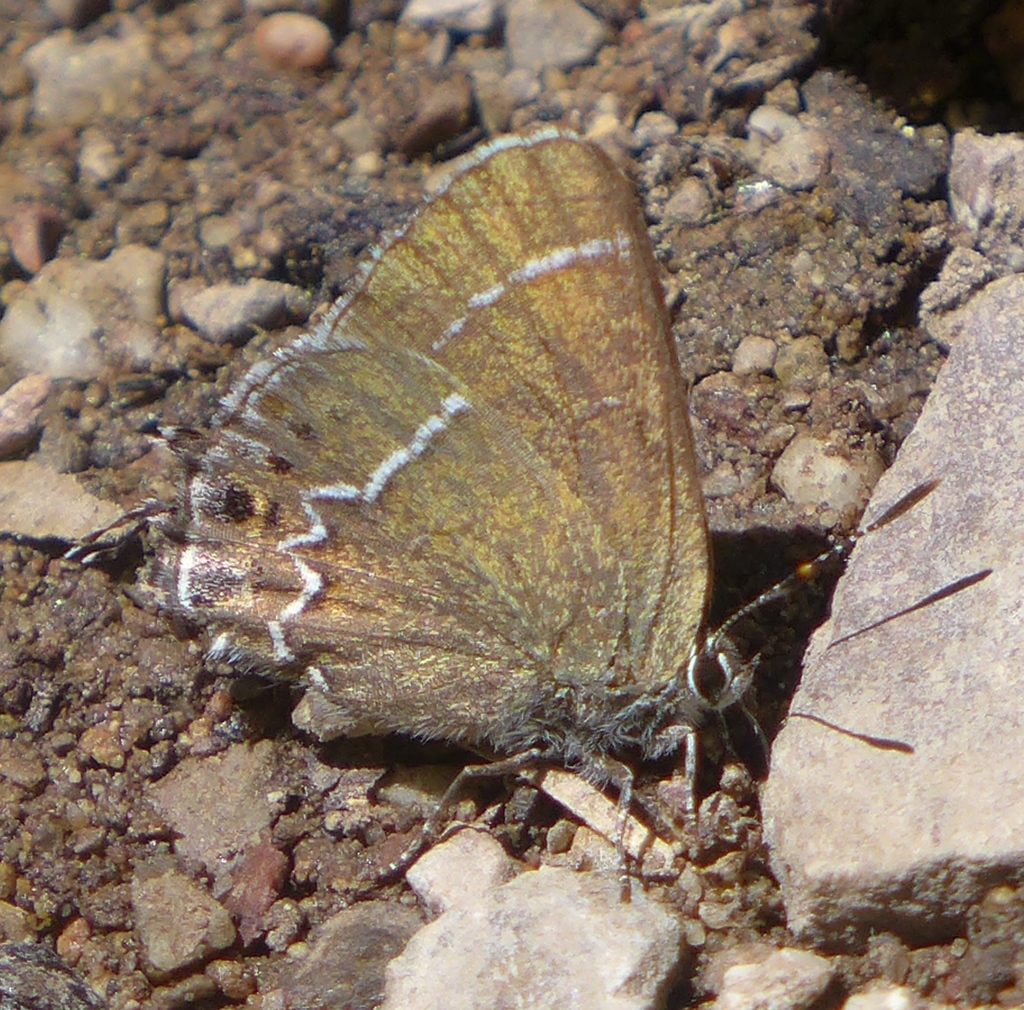
Thicket Hairstreak
Callophrys spinetorum
Insectstrong against fungi, fish
Common
Swarm
While active with another insect in play, each of its attacks also hits the opposing bench for 10, without knocking them out (20 with two others).
38

40
Thicket Hairstreak
Callophrys spinetorum
Insectstrong against fungi, fish
Common
While active with another insect in play, each of its attacks also hits the opposing bench for 10, without knocking them out (20 with two others).
Callophrys spinetorum
Photo: © John Hibbard (original photo) · CC BY 4.0 (licence text) · cropped
Strong against: it deals 20% more damage to them. Weak against: these types deal 20% more damage to it.
Callophrys spinetorum, the thicket hairstreak, is a butterfly of the family Lycaenidae. It was described by William Chapman Hewitson in 1867. It is found in North America from British Columbia through the Rocky Mountains to New Mexico and Mexico and through California to Baja California. The habitat consists of pinyon-juniper forests, mixed woodlands, and coniferous forests.
The wingspan is 25–32 mm. Adults are on wing from May to August in one generation per year. They feed on flower nectar.
The larvae are specialists, feeding on the shoots, flowers, and fruit of dwarf mistletoes in the genus Arceuthobium. In particular, larvae have been documented feeding on A. campylopodum, A. occidentale, A. abietinum, A. blumeri, A. cyanocarpum, A. laricis, A. vaginatum subsp. cryptopodum, A. divaricatum, and A. globosum. The larvae resemble their host plants, both because of their segmented bodies and because they take on the color of their food, an example of mimicry.
Excerpt from the Wikipedia article Callophrys spinetorum, by its authors, under the CC BY-SA 4.0 licence.
No global status on the IUCN Red List: that’s what makes this card Common.
Every Common card has 100 points, shared between HP, ATK and DEF:
How they’re shared out:

 DEF 40