 …
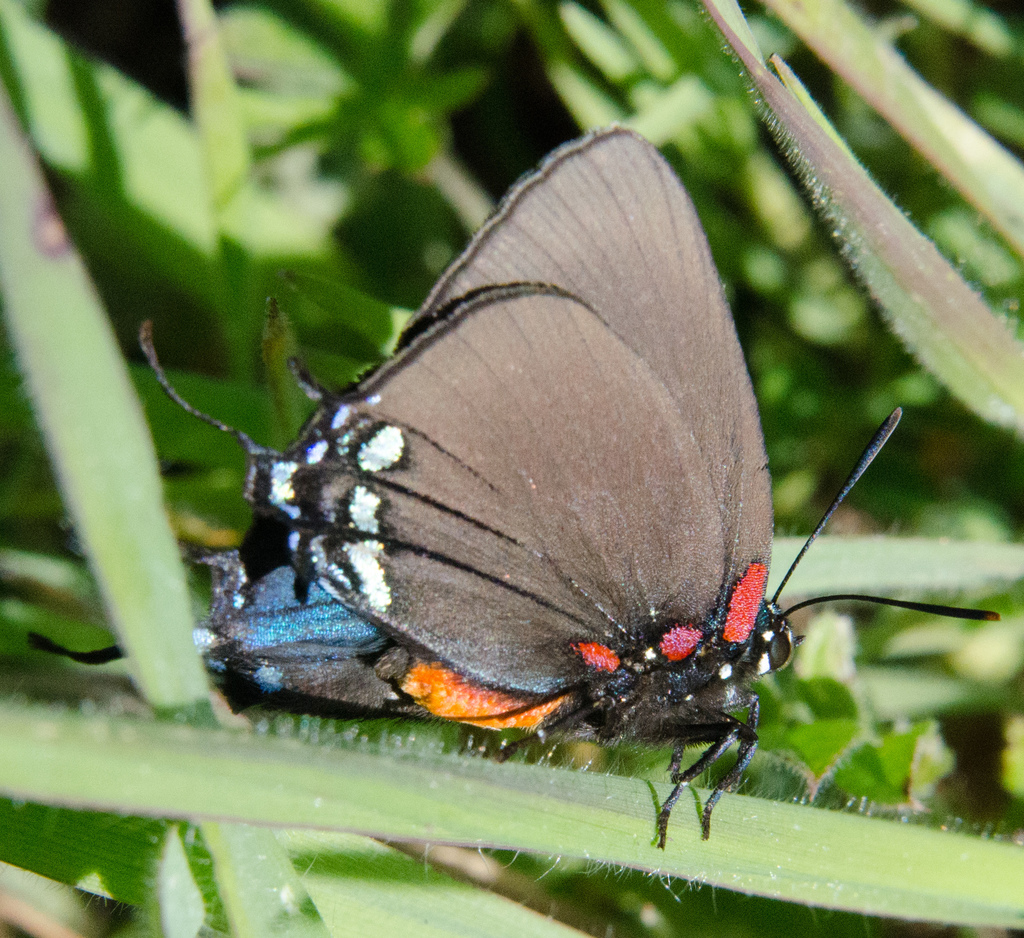
Great Purple Hairstreak
Atlides halesus
Insectstrong against fungi, fish
Common
Swarm
While active with another insect in play, each of its attacks also hits the opposing bench for 10, without knocking them out (20 with two others).
41

39
Great Purple Hairstreak
Atlides halesus
Insectstrong against fungi, fish
Common
While active with another insect in play, each of its attacks also hits the opposing bench for 10, without knocking them out (20 with two others).
Atlides halesus
Photo: © Don Loarie (original photo) · CC BY 4.0 (licence text) · cropped
Strong against: it deals 20% more damage to them. Weak against: these types deal 20% more damage to it.
The great purple hairstreak (Atlides halesus), also called the great blue hairstreak, is a common gossamer-winged butterfly species in parts of the United States. It is actually a Neotropical species; its North American range only includes the warm-temperate and subtropical parts of that continent, and it ranges southwards almost to the Isthmus of Panama. The type specimen, however, was shipped to Europe from the Colony of Virginia, probably around the time of the United States Declaration of Independence.
The common names refer to the butterfly's two main colors – dusky purple on the underside, and iridescent blue above. Particularly the males are very colorful in flight – brilliant blue and velvety black, with bright red and golden markings – but when sitting down they show their inconspicuous dusky purple underside. On each hindwing, there are two tails, with one short and one long tail, lending itself to the name "hairstreak". Several subspecies are recognized.
Its caterpillar larvae feed on the mistletoe genus Phoradendron.
Excerpt from the Wikipedia article Great purple hairstreak, by its authors, under the CC BY-SA 4.0 licence.
Least Concern on the IUCN Red List: that’s what makes this card Common.
Every Common card has 100 points, shared between HP, ATK and DEF:
How they’re shared out:

 DEF 39