 …
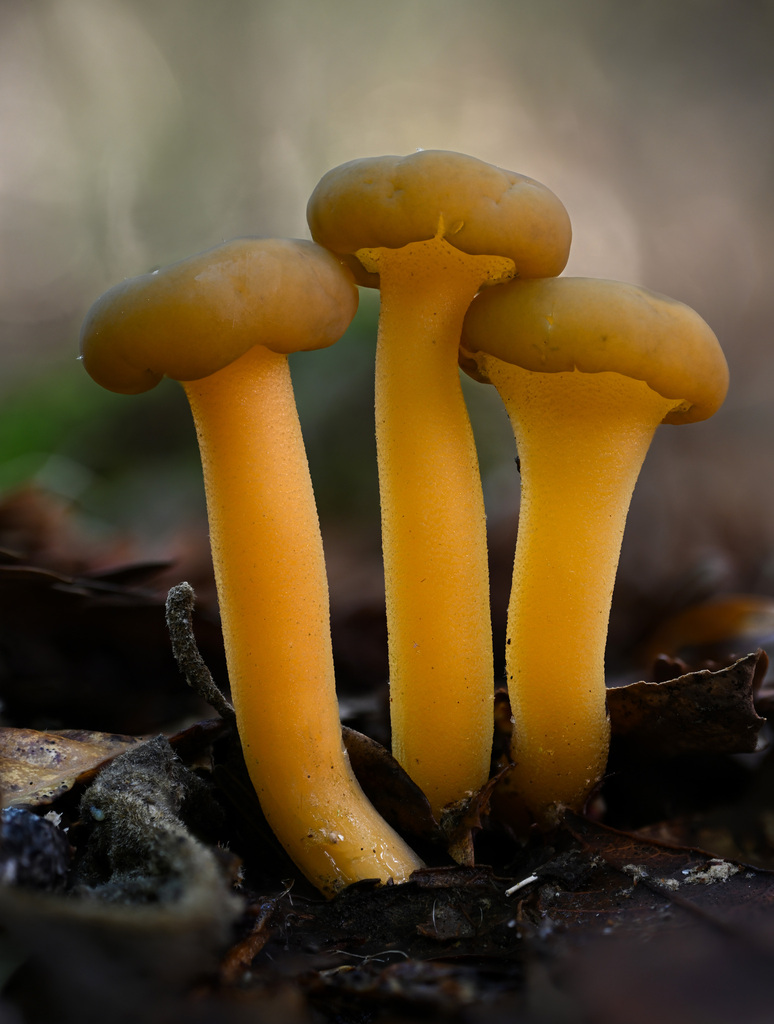
Ochre Jelly Club
Leotia lubrica
Fungusstrong against amphibians, reptiles
Common
Mycelium
While active with another fungus in play, it regains 5 HP at the start of your turn (8 with two others).
42

27
Ochre Jelly Club
Leotia lubrica
Fungusstrong against amphibians, reptiles
Common
While active with another fungus in play, it regains 5 HP at the start of your turn (8 with two others).
Leotia lubrica
Photo: © Alan Rockefeller (original photo) · CC BY-SA 4.0 (licence text) · cropped
Strong against: it deals 20% more damage to them. Weak against: these types deal 20% more damage to it.
Leotia lubrica, commonly referred to as a jelly baby, is a species of fungus in the family Leotiaceae. L. lubrica was first validly described by Giovanni Antonio Scopoli, but it was later transferred to Leotia by Christiaan Hendrik Persoon. Its relationship with other members of the genus, of which it is the type species, is complicated.
The species produces small fruit bodies up to 6 centimetres (2+1⁄2 in) in height, featuring a head and a stalk. The youngest fruit bodies are small and conical, but the fertile head quickly grows from the stalk. Ochre with tints of olive-green, the heads are irregularly shaped, while the stalk, of a similar colour, attaches them to the ground. The appearance can be somewhat variable and is similar to a number of other species, including Cudonia confusa, C. circinans, L. atrovirens and L. viscosa.
L. lubrica has been recorded in Europe, Asia, North America, and Australasia. Growing in woodland among moss, plant detritus or other habitats, the fruit bodies are typically found in large numbers, though they can grow in tight clumps or even individually. The species may feed as a saprotroph or possibly obtains nutrition from living trees through ectomycorrhizae. It is often described as inedible, despite its common name, but has occasionally been reported as a good edible.
Excerpt from the Wikipedia article Leotia lubrica, by its authors, under the CC BY-SA 4.0 licence.
No global status on the IUCN Red List: that’s what makes this card Common.
Every Common card has 100 points, shared between HP, ATK and DEF:
How they’re shared out:

 DEF 27