 …
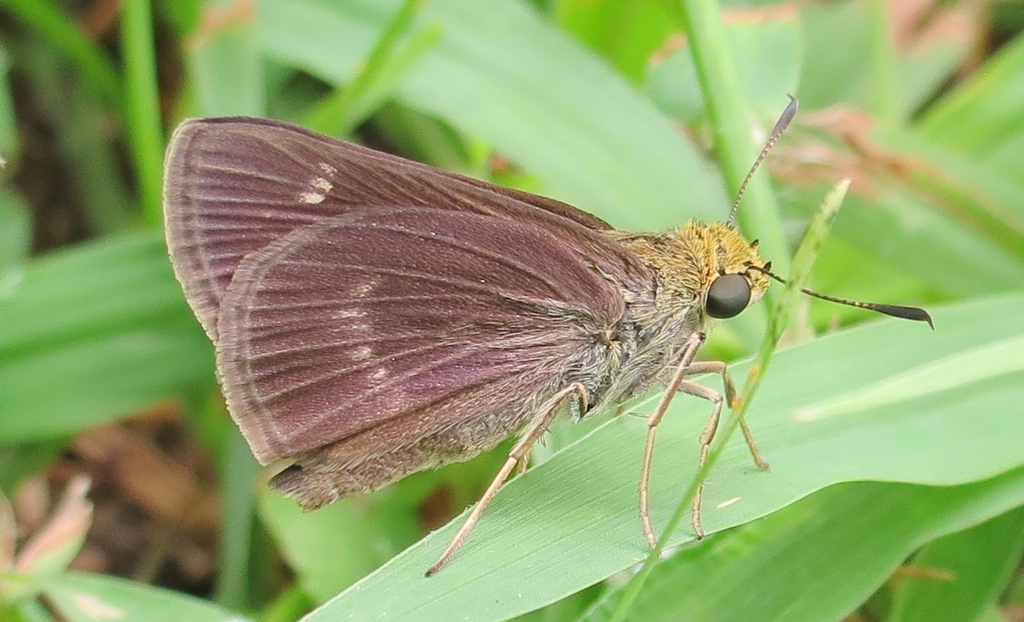
Dun Skipper
Euphyes vestris
Insectstrong against fungi, fish
Common
Swarm
While active with another insect in play, each of its attacks also hits the opposing bench for 10, without knocking them out (20 with two others).
39

40
Dun Skipper
Euphyes vestris
Insectstrong against fungi, fish
Common
While active with another insect in play, each of its attacks also hits the opposing bench for 10, without knocking them out (20 with two others).
Euphyes vestris
Photo: © Paul Bedell (original photo) · CC BY-SA 4.0 (licence text) · cropped
Strong against: it deals 20% more damage to them. Weak against: these types deal 20% more damage to it.
Euphyes vestris, commonly referred to as the dun skipper, is a butterfly belonging to the Hesperiidae family. It appears as a brown, medium-sized butterfly found across the United States and southern Canada. Euphyes vestris inhabits multiple environments, including open fields, oak woodlands, and riparian wetlands. There are currently four recorded subspecies of Euphyes vestris, three of which have been identified across eatern, western, and mountainous regions of North America. These subspecies are E. v. metacomet, E. v. vestris, and E. v. kiowah. The fourth subspecies, Euphyes vestris harbisoni, known as the Harbison's dun skipper is geographically restricted to southern California and northern Mexico.
The dun skipper, Euphyes vestris, is categorized within the genus Euphyes, a known group of ten closely related skippers found in North America. Species belonging to this genus live in environments with high humidity, such as swampy habitats, and occur in small populations. Across its subspecies it has been recognized that E. vestris relies on sedges, which are plants in the family Cyperaceae, as host plants for its larval development.
Excerpt from the Wikipedia article Euphyes vestris, by its authors, under the CC BY-SA 4.0 licence.
No global status on the IUCN Red List: that’s what makes this card Common.
Every Common card has 100 points, shared between HP, ATK and DEF:
How they’re shared out:

 DEF 40