 …
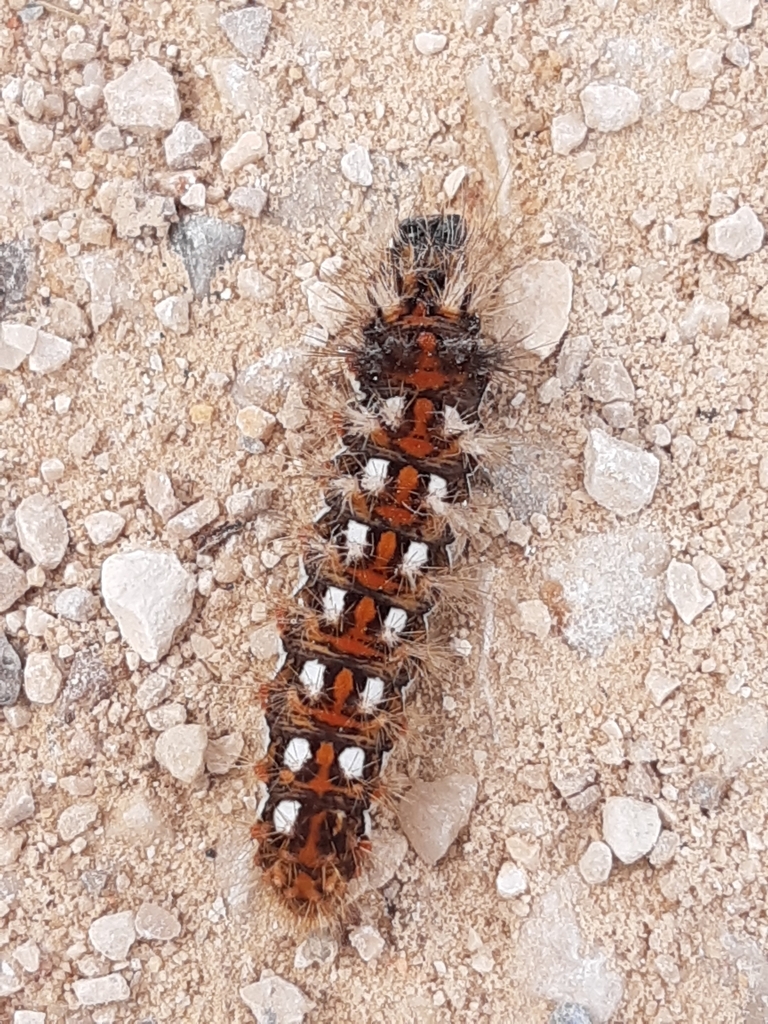
Knot Grass Moth
Acronicta rumicis
Insectstrong against fungi, fish
Common
Swarm
While active with another insect in play, each of its attacks also hits the opposing bench for 10, without knocking them out (20 with two others).
41

38
Knot Grass Moth
Acronicta rumicis
Insectstrong against fungi, fish
Common
While active with another insect in play, each of its attacks also hits the opposing bench for 10, without knocking them out (20 with two others).
Acronicta rumicis
Photo: © Javier Sánchez Álvarez (original photo) · CC BY 4.0 (licence text) · cropped
Strong against: it deals 20% more damage to them. Weak against: these types deal 20% more damage to it.
Acronicta rumicis, the knot grass moth, is a species of moth which is part of the genus Acronicta and family Noctuidae. It was first described by Carl Linnaeus in his 1758 10th edition of Systema Naturae. It is found in the Palearctic region. A. rumicis lives and feeds on plants located in wide-open areas. At its larval stage, as a caterpillar, it causes such a large impact as a crop pest that it has received much attention and research. A. rumicis feeds on maize, strawberries and other herbaceous plants.
The moth's evolution has been affected by the industrial melanism that occurred in Europe during the late 19th and early 20th centuries, causing a dramatic increase in two aberrations (salicin and lugubris), which have darker grey wings. Today, A. rumicis is important to conservation efforts in the United Kingdom, because, like many other species, it is in decline. However, as it is part of a UK Priority Biodiversity Action Plan and receiving greater awareness and conservation, the species may become more abundant.
Excerpt from the Wikipedia article Acronicta rumicis, by its authors, under the CC BY-SA 4.0 licence.
No global status on the IUCN Red List: that’s what makes this card Common.
Every Common card has 100 points, shared between HP, ATK and DEF:
How they’re shared out:

 DEF 38