
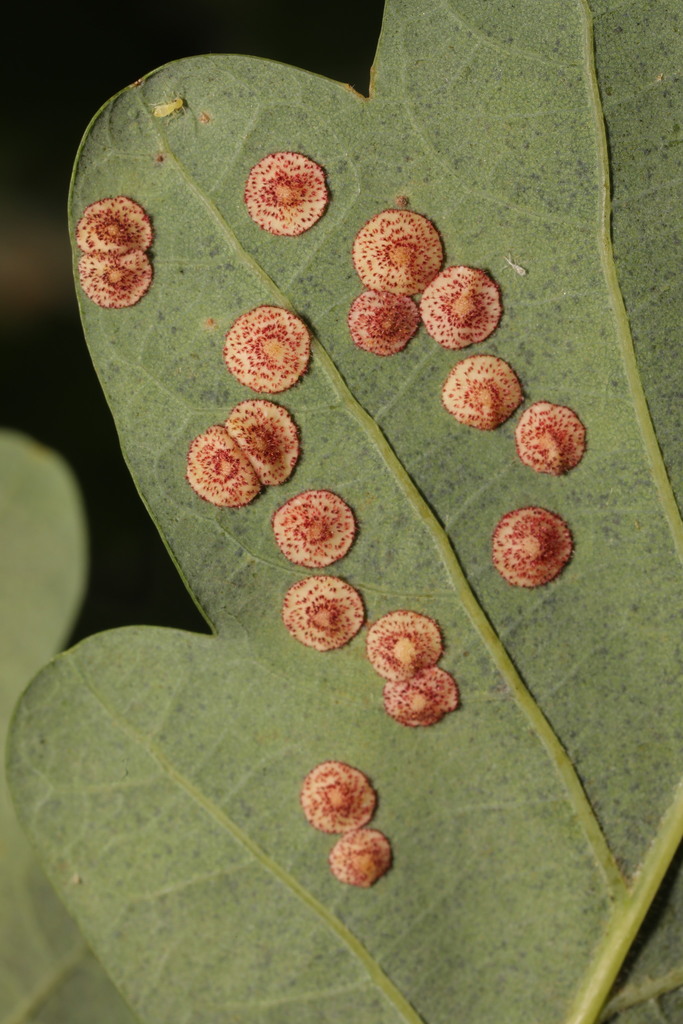
Common Spangle Gall Wasp
Neuroterus quercusbaccarum
Insectstrong against fungi, fish
Common
While active with another insect in play, each of its attacks also hits the opposing bench for 10, without knocking them out (20 with two others).

Common Spangle Gall Wasp
Neuroterus quercusbaccarum
Insectstrong against fungi, fish
Common
While active with another insect in play, each of its attacks also hits the opposing bench for 10, without knocking them out (20 with two others).
Neuroterus quercusbaccarum
Photo: Stephen James McWilliam (original photo) · CC0 (licence text) · cropped
Strong against: it deals 20% more damage to them. Weak against: these types deal 20% more damage to it.
The common spangle gall on the underside of leaves and the currant gall on the male catkins or occasionally the leaves, develop as chemically induced distortions on pedunculate oak (Quercus robur), or sessile oak (Quercus petraea) trees, caused by the cynipid wasp Neuroterus quercusbaccarum which has both agamic and bisexual generations.
Previous names or synonyms for this species are Neuroterus baccarum, N. lenticularis, N. malpighii, Cynips lenticularis, C. quercus-baccarum, Spathegaster baccarum, S. varius, S. interruptor.
Excerpt from the Wikipedia article Neuroterus quercusbaccarum, by its authors, under the CC BY-SA 4.0 licence.
No global status on the IUCN Red List: that’s what makes this card Common.
Every Common card has 100 points, shared between HP, ATK and DEF:
How they’re shared out:

