 …
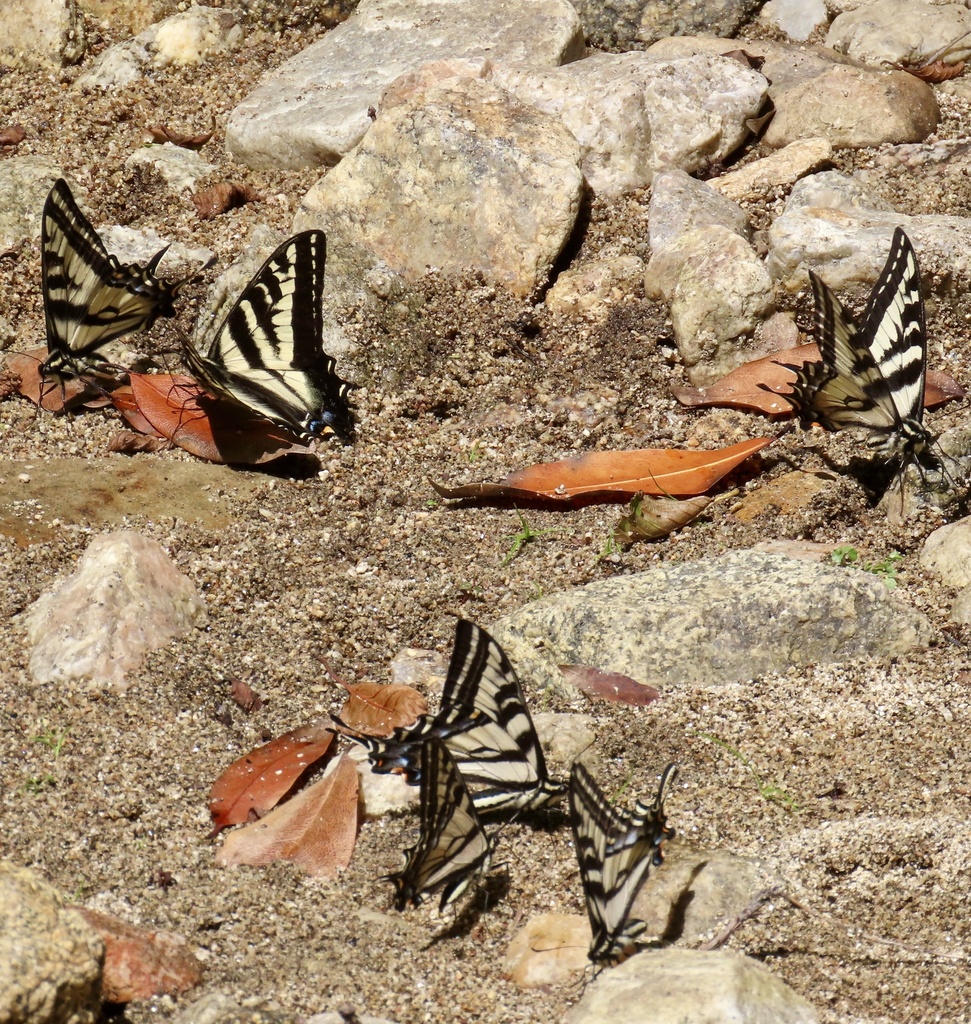
Pale Swallowtail
Papilio eurymedon
Insectstrong against fungi, fish
Common
Swarm
While active with another insect in play, each of its attacks also hits the opposing bench for 10, without knocking them out (20 with two others).
40

37
Pale Swallowtail
Papilio eurymedon
Insectstrong against fungi, fish
Common
While active with another insect in play, each of its attacks also hits the opposing bench for 10, without knocking them out (20 with two others).
Papilio eurymedon
Photo: Irene (original photo) · CC0 (licence text) · cropped
Strong against: it deals 20% more damage to them. Weak against: these types deal 20% more damage to it.
Papilio eurymedon, the pale swallowtail or pallid swallowtail, is a relatively common swallowtail butterfly found throughout much of the western North America. The species was first described by Hippolyte Lucas in 1852. It is found on the Pacific coast from northern Baja California to southernmost British Columbia, and inland to New Mexico and the Black Hills of South Dakota. It is present from the coast to western Montana, and from Wyoming to northern New Mexico. It is absent from most of Nevada and western Utah. It prefers open woodlands and forest clearings, especially near permanent bodies of water such as ponds, but also urban parks and is occasionally seen in suburban areas. Though not as common as the western tiger swallowtail, the pale swallowtail can be seen in large numbers at puddling parties where up to a dozen or more males may be gathered. There they join other species to sip water from damp soil to obtain nutrients for mating. Their appearance is quite similar to that of the western tiger swallowtail, except they are a white-cream colour or very pale yellow. Some pale swallowtails also have differing amounts of red-orange patches on the top of the wings just above the tail. There is a submarginal band on the bottom of the hindwings. Tiger stripes and borders are thicker than those of western tiger swallowtails. The wingspan is typically 3.5 to 4.5 inches (8.9 to 11.4 cm).
Abridged excerpt from the Wikipedia article Papilio eurymedon, by its authors, under the CC BY-SA 4.0 licence.
No global status on the IUCN Red List: that’s what makes this card Common.
Every Common card has 100 points, shared between HP, ATK and DEF:
How they’re shared out:

 DEF 37