 …
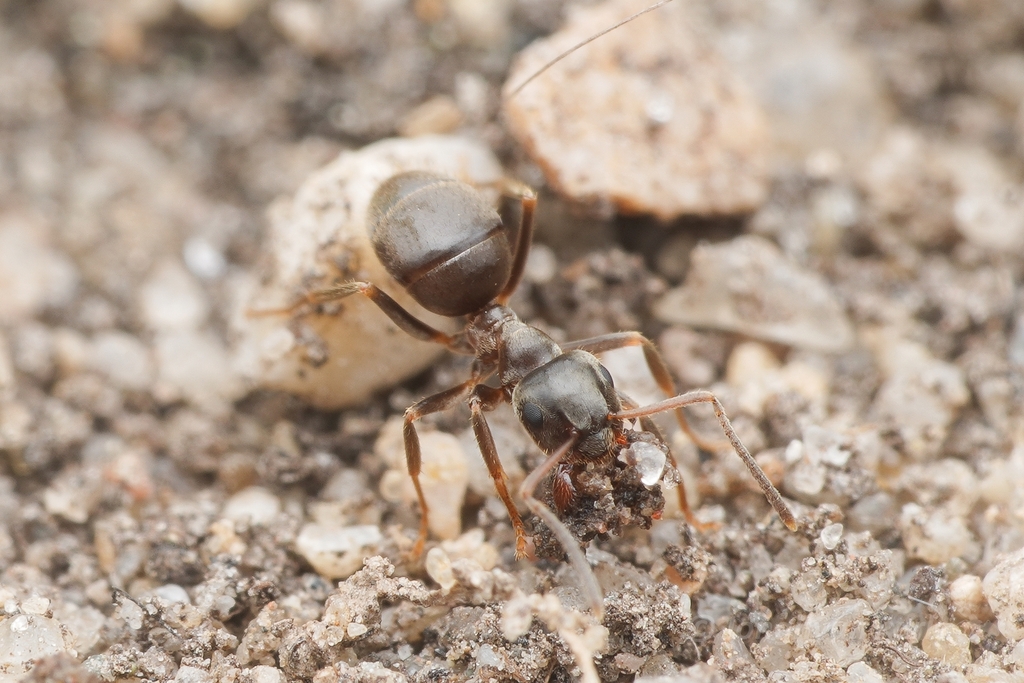
Black Garden Ant
Lasius niger
Insectstrong against fungi, fish
Common
Swarm
While active with another insect in play, each of its attacks also hits the opposing bench for 10, without knocking them out (20 with two others).
31

39
Black Garden Ant
Lasius niger
Insectstrong against fungi, fish
Common
While active with another insect in play, each of its attacks also hits the opposing bench for 10, without knocking them out (20 with two others).
Lasius niger
Photo: © Jonghyun Park (original photo) · CC BY 4.0 (licence text) · cropped
Strong against: it deals 20% more damage to them. Weak against: these types deal 20% more damage to it.
The black garden ant (Lasius niger), also known as the common black ant, is a formicine ant, the type species of the genus Lasius, which is found across Europe and in some parts of North America, and believed to inhabit certain parts of Asia. The European species was split into two species; L. niger, which is found in open areas; and L. platythorax, which is found in forest habitats. It is monogynous, meaning colonies contain a single queen.
Lasius niger colonies normally range from 4,000 to 7,000 workers, but can reach 40,000 in rare cases. An L. niger queen can live for up to 29 years, the longest recorded lifespan for any eusocial insect. Lasius niger queens in the early stages of founding can have two to three other queens in the nest. They will tolerate each other until the first workers come, then it is most likely they will fight until one queen remains. Under laboratory conditions, workers can live at least four years.
Lasius niger is host to the silver-studded blue butterfly Plebejus argus; it is also host to a number of temporary social parasites of the Lasius mixtus group, including Lasius mixtus and Lasius umbratus.
Excerpt from the Wikipedia article Black garden ant, by its authors, under the CC BY-SA 4.0 licence.
No global status on the IUCN Red List: that’s what makes this card Common.
Every Common card has 100 points, shared between HP, ATK and DEF:
How they’re shared out:

 DEF 39