 …
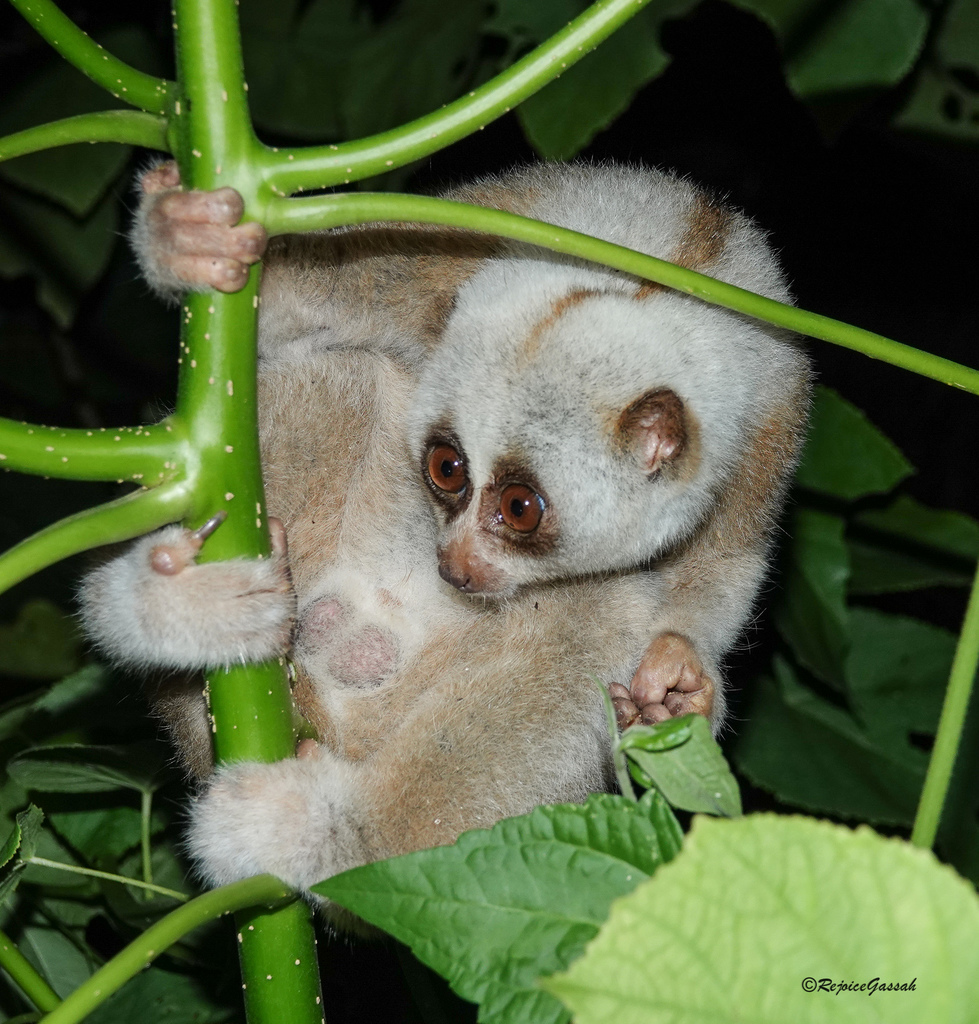
Bengal Slow Loris
Nycticebus bengalensis
Mammalstrong against birds, fungi
Epic
Pack
While active with another mammal in play, it hits 7 harder (14 with two others).
43

53
Bengal Slow Loris
Nycticebus bengalensis
Mammalstrong against birds, fungi
Epic
While active with another mammal in play, it hits 7 harder (14 with two others).
Nycticebus bengalensis
Photo: © Rejoice Gassah (original photo) · CC BY 4.0 (licence text) · cropped
Strong against: it deals 20% more damage to them. Weak against: these types deal 20% more damage to it.
The Bengal slow loris (Nycticebus bengalensis) or northern slow loris is a strepsirrhine primate and a species of slow loris native to the Bangladesh, Northeast India, Cambodia, Laos, Burma, Vietnam, southern China, and Thailand. Its geographic range is larger than that of any other slow loris species. Considered a subspecies of the Sunda slow loris (N. coucang) until 2001, phylogenetic analysis suggests that the Bengal slow loris is most closely related to the Sunda slow loris. However, some individuals in both species have mitochondrial DNA sequences that resemble those of the other species, due to introgressive hybridization. It is the largest species of slow loris, measuring 26 to 38 cm (10 to 15 in) from head to tail and weighing between 1 and 2.1 kg (2.2 and 4.6 lb). Like other slow lorises, it has a wet nose (rhinarium), a round head, flat face, large eyes, small ears, a vestigial tail, and dense, woolly fur. The toxin it secretes from its brachial gland (a scent gland in its arm) differs chemically from that of other slow loris species and may be used to communicate information about sex, age, health, and social status.
Abridged excerpt from the Wikipedia article Bengal slow loris, by its authors, under the CC BY-SA 4.0 licence.
Endangered on the IUCN Red List: that’s what makes this card Epic.
Every Epic card has 145 points, shared between HP, ATK and DEF:
How they’re shared out:

 DEF 53