 …
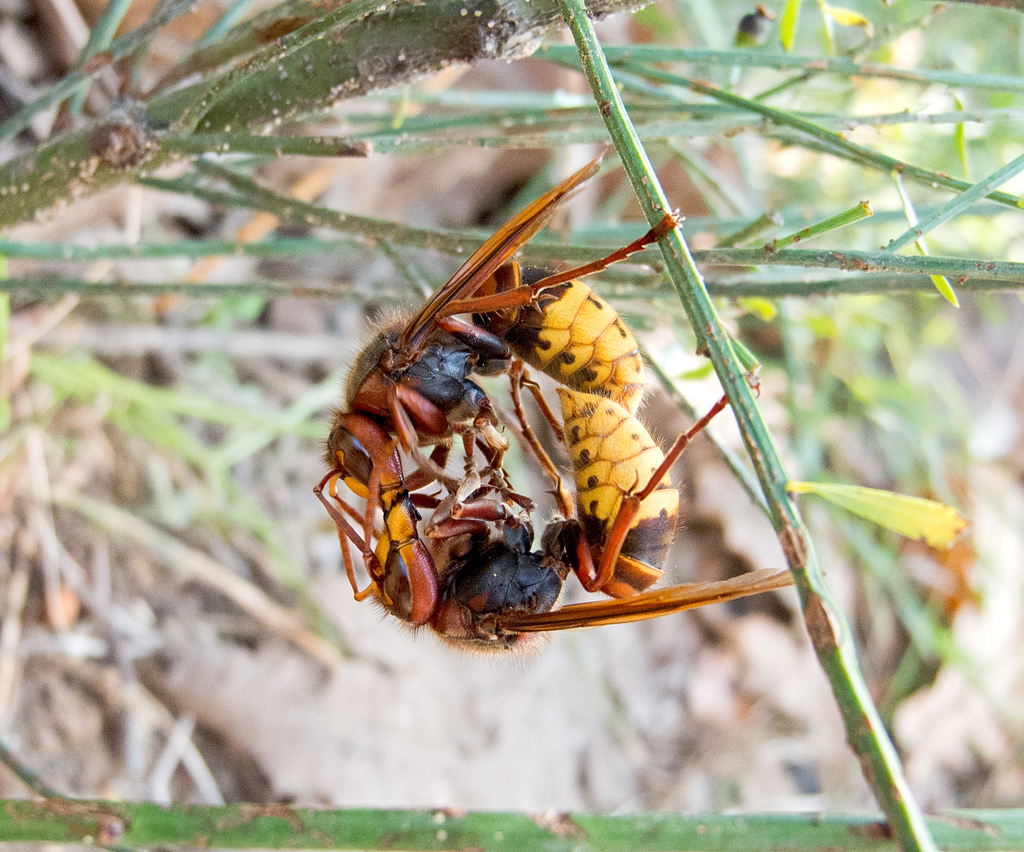
European Hornet
Vespa crabro
Insectstrong against fungi, fish
Common
Swarm
While active with another insect in play, each of its attacks also hits the opposing bench for 10, without knocking them out (20 with two others).
34

37
European Hornet
Vespa crabro
Insectstrong against fungi, fish
Common
While active with another insect in play, each of its attacks also hits the opposing bench for 10, without knocking them out (20 with two others).
Vespa crabro
Photo: © katunchik (original photo) · CC BY 4.0 (licence text) · cropped
Strong against: it deals 20% more damage to them. Weak against: these types deal 20% more damage to it.
The European hornet (Vespa crabro) is the largest eusocial wasp native to Europe. It is also the only true hornet (genus Vespa) found in North America, having been introduced to the United States and Canada from Europe as early as 1840. Vespines, such as V. crabro, are known for making intricate paper-like nests out of surrounding plant materials and other fibers. Unlike most other vespines, reproductive suppression involves worker policing instead of queen pheromone control, as was previously thought.
This species stings in response to being stepped on or grabbed, but generally avoids conflict. It is also defensive of its nest and can be aggressive around food sources. Care should be taken when they are found in these circumstances, as they may sting without warning. European hornets are largely carnivorous and hunt large insects such as beetles, wasps, large moths, dragonflies, and mantises. They also feed on fallen fruit and other sources of sugary food. Mutual predation between medium-sized hornets and the Asilidae (robber flies) is often reported.
Excerpt from the Wikipedia article European hornet, by its authors, under the CC BY-SA 4.0 licence.
No global status on the IUCN Red List: that’s what makes this card Common.
Every Common card has 100 points, shared between HP, ATK and DEF:
How they’re shared out:

 DEF 37