 …
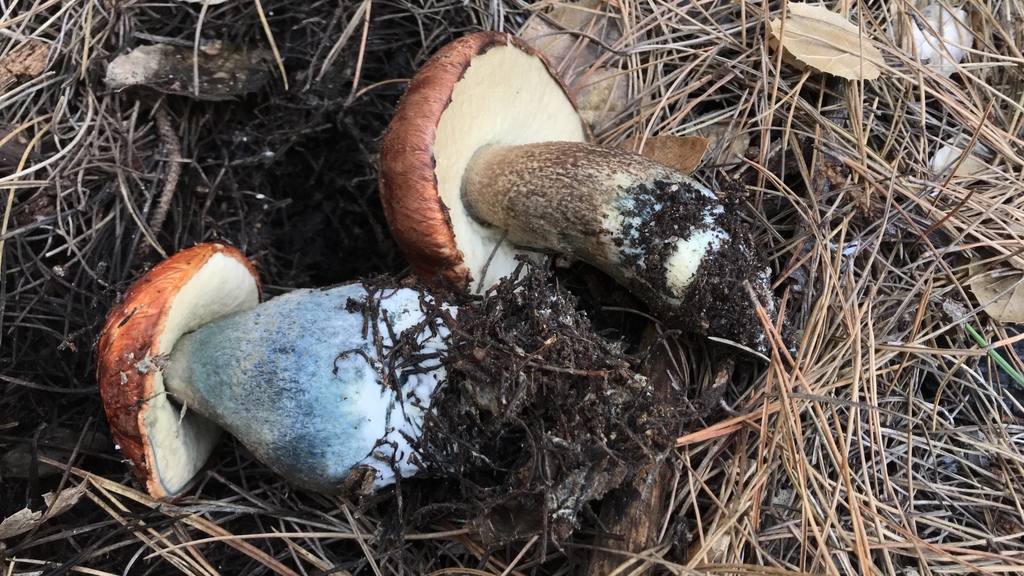
Manzanita bolete
Leccinum manzanitae
Fungusstrong against amphibians, reptiles
Common
Mycelium
While active with another fungus in play, it regains 5 HP at the start of your turn (8 with two others).
37

30
Manzanita bolete
Leccinum manzanitae
Fungusstrong against amphibians, reptiles
Common
While active with another fungus in play, it regains 5 HP at the start of your turn (8 with two others).
Leccinum manzanitae
Photo: © debk (original photo) · CC BY-SA 4.0 (licence text) · cropped
Strong against: it deals 20% more damage to them. Weak against: these types deal 20% more damage to it.
Leccinum manzanitae is a species of bolete fungus in the family Boletaceae. Described as new to science in 1971, it is commonly known as the manzanita bolete for its usual mycorrhizal association with manzanita trees.
Its fruit bodies (mushrooms) have sticky reddish to brown caps up to 20 cm (8 in), and its stipes are up to 16 cm (6.3 in) long and 3.5 cm (1.4 in) thick. They have a whitish background color punctuated with small black scales known as scabers. L. manzanitae can be usually distinguished from other similar bolete mushrooms by its large size, reddish cap, dark scabers on a whitish stipe, and association with manzanita and madrone.
Found only in the Pacific Northwest region of the United States and Canada, it is the most common Leccinum species in California. The mushroom is edible, although opinions vary as to its quality.
Excerpt from the Wikipedia article Leccinum manzanitae, by its authors, under the CC BY-SA 4.0 licence.
No global status on the IUCN Red List: that’s what makes this card Common.
Every Common card has 100 points, shared between HP, ATK and DEF:
How they’re shared out:

 DEF 30