 …
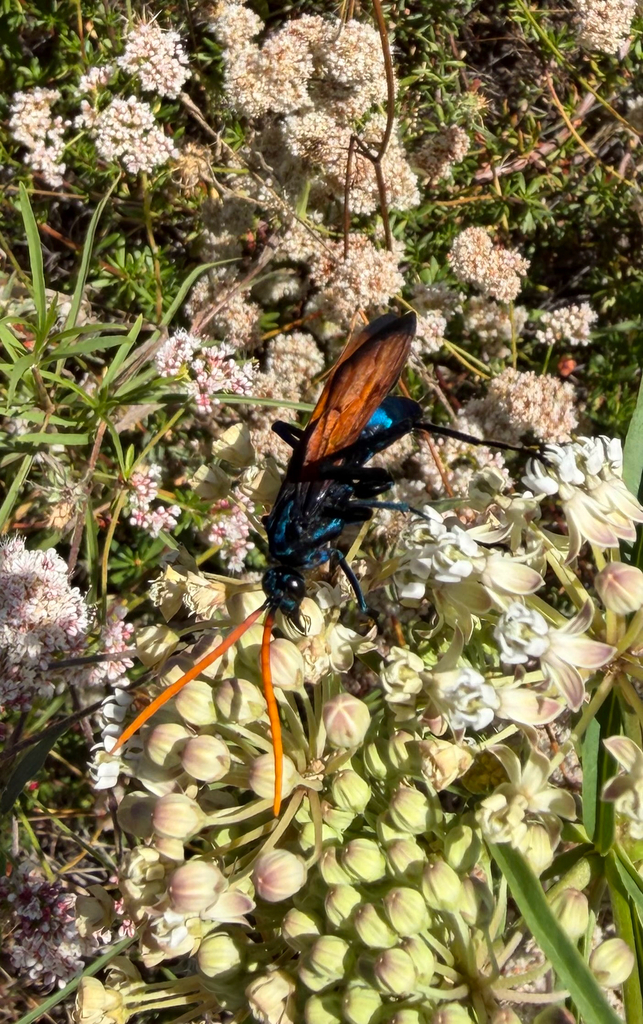
Milde's Tarantula-hawk Wasp
Pepsis mildei
Insectstrong against fungi, fish
Common
Swarm
While active with another insect in play, each of its attacks also hits the opposing bench for 10, without knocking them out (20 with two others).
32

38
Milde's Tarantula-hawk Wasp
Pepsis mildei
Insectstrong against fungi, fish
Common
While active with another insect in play, each of its attacks also hits the opposing bench for 10, without knocking them out (20 with two others).
Pepsis mildei
Photo: © Rachel Allingham (original photo) · CC BY 4.0 (licence text) · cropped
Strong against: it deals 20% more damage to them. Weak against: these types deal 20% more damage to it.
Pepsis mildei, also known as Milde's tarantula-hawk wasp, is a species of predatory spider wasp native to the Western Hemisphere. These wasps capture live tarantulas to feed to their larva; the adults graze on flowers. Tarantula hawks generally have no meaningful predators. The wing color is black and/or orange, with rare leucistic wing coloration known in males. The wings of P. mildei are duller overall than those of Pepsis grossa or Pepsis cinnabarina. Per Edward Essig, Milde's tarantula-hawk wasp usually measures 20–30 millimeters in length and is a metallic blue-black overall, with "the antennae reddish, dusky at extreme base in the male and the basal third dusky in the female; the wings fiery red with the bases and apices dusky". In all tarantula wasps, the antennae can be used to distinguish between males and female: males are straight or gently arced, while the females have curved antennae. The lifespan of males is one to two months, while female Milde's tarantula-hawk wasps live for a longer span of time.
Excerpt from the Wikipedia article Pepsis mildei, by its authors, under the CC BY-SA 4.0 licence.
No global status on the IUCN Red List: that’s what makes this card Common.
Every Common card has 100 points, shared between HP, ATK and DEF:
How they’re shared out:

 DEF 38