 …
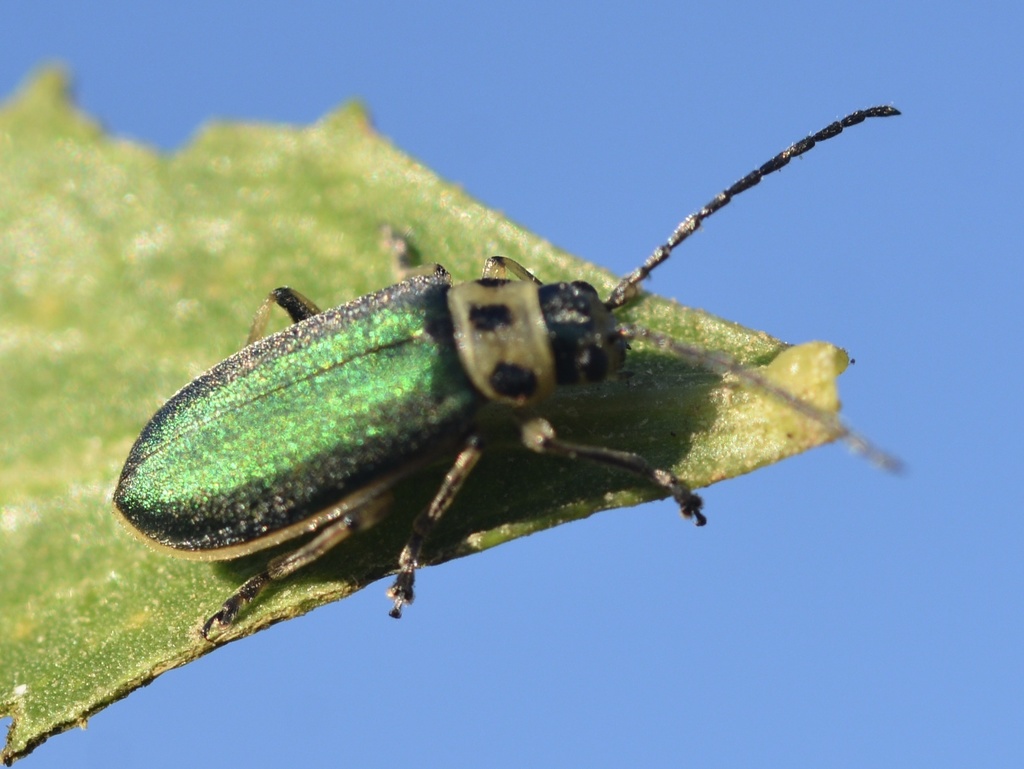
Coyote Brush Leaf Beetle
Trirhabda flavolimbata
Insectstrong against fungi, fish
Common
Swarm
While active with another insect in play, each of its attacks also hits the opposing bench for 10, without knocking them out (20 with two others).
39

40
Coyote Brush Leaf Beetle
Trirhabda flavolimbata
Insectstrong against fungi, fish
Common
While active with another insect in play, each of its attacks also hits the opposing bench for 10, without knocking them out (20 with two others).
Trirhabda flavolimbata
Photo: © Cricket Raspet (original photo) · CC BY 4.0 (licence text) · cropped
Strong against: it deals 20% more damage to them. Weak against: these types deal 20% more damage to it.
Trirhabda flavolimbata, also called the coyote brush leaf beetle, is a species of skeletonizing leaf beetle in the family Chrysomelidae. It is found in California in coastal scrublands or chaparral habitats. Its main host plant is coyote brush, but it has been noted to feed on other species of Baccharis, as well as Aster, Senecio, Artemisia, Solidago, and Eriodictyon.
Larvae and adult coyote brush leaf beetles are metallic green. This coloration might function as a warning color, as both larvae and adult beetles are toxic due to chemicals ingested from the coyote brush.
Coyote brush leaf beetles have one brood a season. They lay their eggs in soil, where they remain over summer and winter before hatching. Larvae feed voraciously on the coyote brush, then return to the soil to pupate for about two weeks. Larvae are generally active February to March, with adults active April to May.
Excerpt from the Wikipedia article Trirhabda flavolimbata, by its authors, under the CC BY-SA 4.0 licence.
No global status on the IUCN Red List: that’s what makes this card Common.
Every Common card has 100 points, shared between HP, ATK and DEF:
How they’re shared out:

 DEF 40