 …
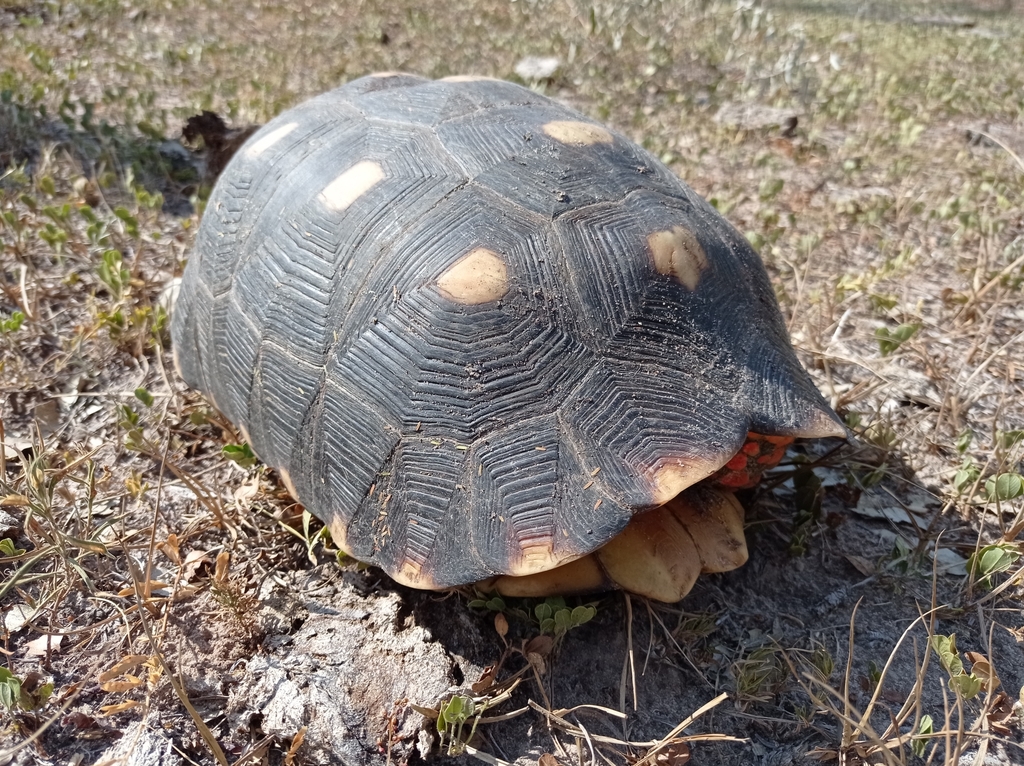
Red-footed Tortoise
Chelonoidis carbonarius
Reptilestrong against amphibians, mammals
Common
Scales
While active with another reptile in play, it takes 3 less damage (6 with two others).
45

32
Red-footed Tortoise
Chelonoidis carbonarius
Reptilestrong against amphibians, mammals
Common
While active with another reptile in play, it takes 3 less damage (6 with two others).
Chelonoidis carbonarius
Photo: © Luis Recalde (original photo) · CC BY 4.0 (licence text) · cropped
Strong against: it deals 20% more damage to them. Weak against: these types deal 20% more damage to it.
The red-footed tortoise (Chelonoidis carbonarius) is a species of tortoise from northern South America. These medium-sized tortoises generally average 30 cm (12 in) as adults, but can reach over 40 cm (16 in). They have dark-colored (nearly black), “loaf”-shaped carapaces (top shell) with a lighter patch in the middle of each scute (shell segment), and a somewhat lighter-colored plastron (underbelly). They also have dark limbs dotted with brightly-colored scales, from which they get their name, that range from pale yellow to vivid or dark red. Visible differences are noted between red-footed tortoises from varying eco-regions. They are closely related to the more easterly-distributed yellow-footed tortoise (C. denticulatus) of the Amazon Basin.
Their natural habitat ranges from savannah to forest edges around the Amazon Basin. They are omnivorous tortoises, consuming a wide assortment of plants, grasses, flowers, fruit and (notably) fungi, as well as the occasional earthworm or other invertebrate. When presented with the opportunity, many tortoises will also scavenge on carrion. They do not brumate, due to their equatorial home range, but may aestivate in the hotter, drier months.
Abridged excerpt from the Wikipedia article Red-footed tortoise, by its authors, under the CC BY-SA 4.0 licence.
No global status on the IUCN Red List: that’s what makes this card Common.
Every Common card has 100 points, shared between HP, ATK and DEF:
How they’re shared out:

 DEF 32