 …
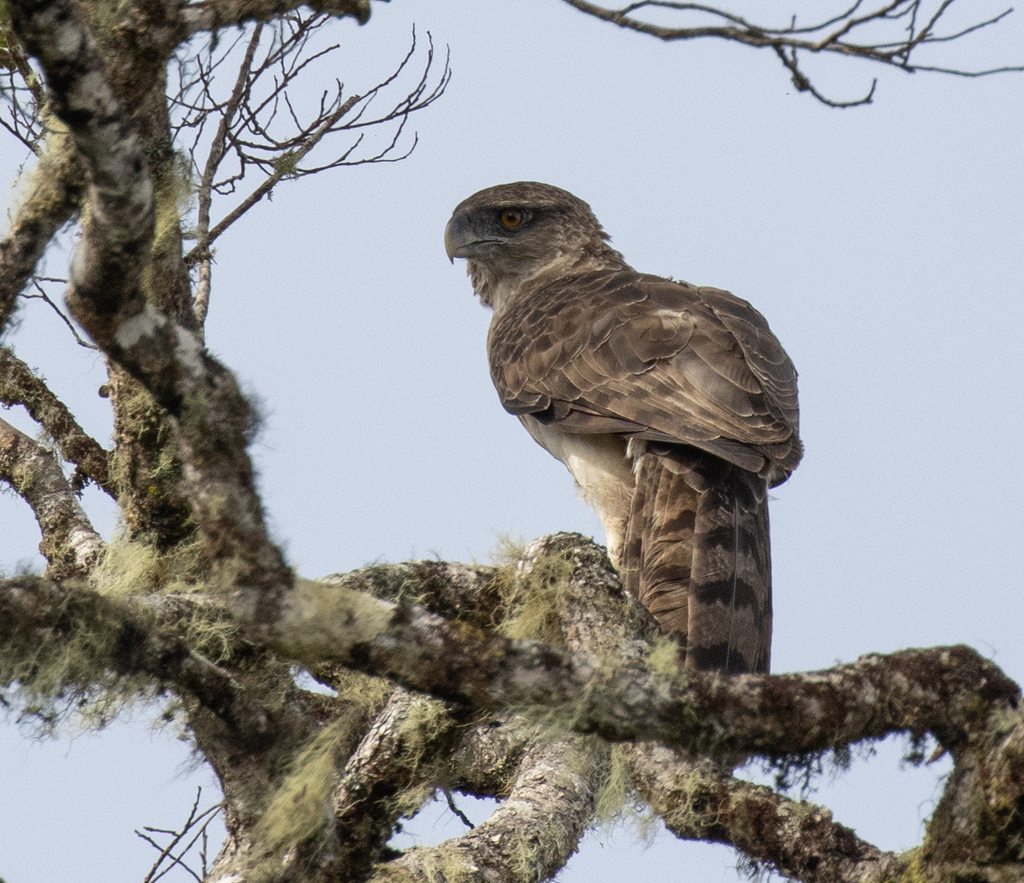
New Guinea Eagle
Harpyopsis novaeguineae
Birdstrong against fish, reptiles
Rare
Swoop
While active with another bird in play, it hits 6 harder on its first attack after entering play (12 with two others).
37

47
New Guinea Eagle
Harpyopsis novaeguineae
Birdstrong against fish, reptiles
Rare
While active with another bird in play, it hits 6 harder on its first attack after entering play (12 with two others).
Harpyopsis novaeguineae
Photo: © avocat (original photo) · CC BY 4.0 (licence text) · cropped
Strong against: it deals 20% more damage to them. Weak against: these types deal 20% more damage to it.
The Papuan eagle (Harpyopsis novaeguineae) is a large bird of prey. It is also known by several other names, including Papuan harpy eagle, New Guinea eagle, New Guinea harpy eagle, or kapul eagle, the latter name from the local name for a usually arboreal marsupial that the eagle is known to regularly hunt. This is an endemic species to New Guinea, and it can occasionally be found throughout the island. This is a forest-dwelling species, usually occurring in mature rainforest. The Papuan eagle is a fairly little-known species for a large eagle; however, it is known to prey on a wide range of prey, probably by and large mammals and birds from small to quite large sizes. Unique amongst eagles, the Papuan eagle is a surprisingly fast and agile terrestrial avian predator and is capable of chasing down prey on the forest floor. What little study has been conducted about its breeding habits suggests it nests in a large forest tree, perhaps every other year. The Papuan eagle is probably naturally scarce, but it is under the threat of habitat destruction by deforestation, as well as hunting. Due to its small and declining population, the species has been classified as vulnerable by the IUCN.
Excerpt from the Wikipedia article Papuan eagle, by its authors, under the CC BY-SA 4.0 licence.
Vulnerable on the IUCN Red List: that’s what makes this card Rare.
Every Rare card has 130 points, shared between HP, ATK and DEF:
How they’re shared out:

 DEF 47