 …
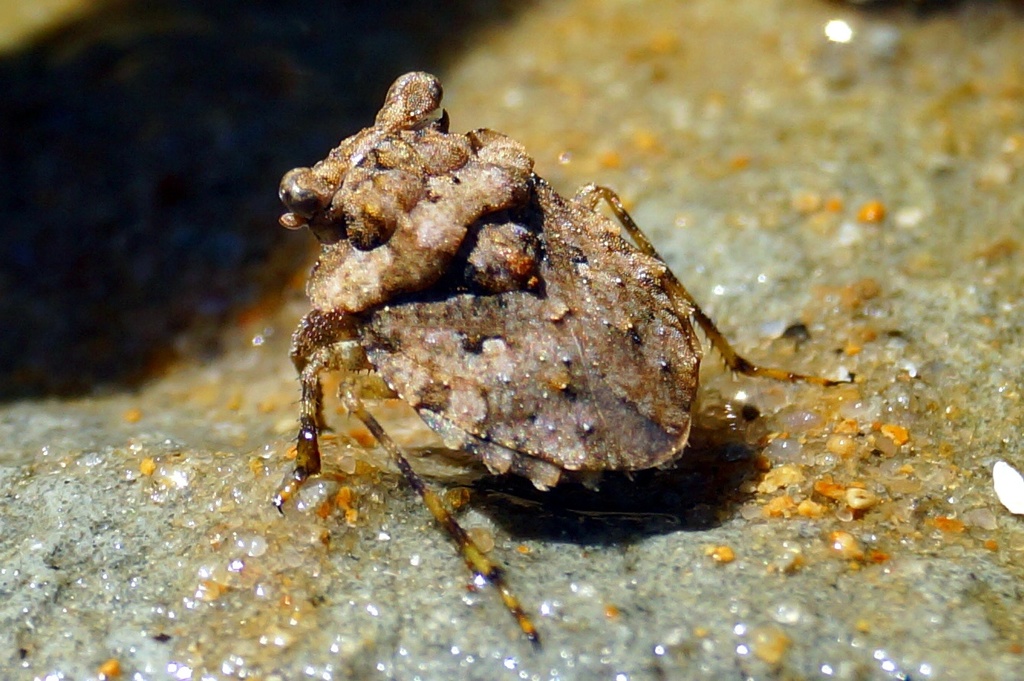
Big-eyed Toad Bug
Gelastocoris oculatus
Insectstrong against fungi, fish
Common
Swarm
While active with another insect in play, each of its attacks also hits the opposing bench for 10, without knocking them out (20 with two others).
31

39
Big-eyed Toad Bug
Gelastocoris oculatus
Insectstrong against fungi, fish
Common
While active with another insect in play, each of its attacks also hits the opposing bench for 10, without knocking them out (20 with two others).
Gelastocoris oculatus
Photo: © dr.scott.mills (original photo) · CC BY-SA 4.0 (licence text) · cropped
Strong against: it deals 20% more damage to them. Weak against: these types deal 20% more damage to it.
Gelastocoris oculatus, the big-eyed toad bug, is a species of toad bug in the family Gelastocoridae. It is found in Central America and North America. North of Mexico, it is found in 28 continental United States and 3 provinces of Canada. They are riparian insects that are found near the shores of freshwater lentic and lotic systems. They prefer damp substrates over saturated substrates. Their coloration, morphology, and hopping behavior resembles toads. Toad bugs use their cryptic coloration to blend in with the sand, soil, or pebble-rich substrate of their habitats to avoid predation. They are able to leap many times their body length to avoid predation, and can swim short distances. Both G. oculatus adults and nymphs capture smaller insects by jumping on them, and consume them with their piercing sucking mouthparts. Females lay their eggs under rocks or in sand or mud, and nymphs have 5 instars.
They are most active in spring to autumn and those in the northern range hibernate. Adults have been known to congregate sometimes.
Excerpt from the Wikipedia article Gelastocoris oculatus, by its authors, under the CC BY-SA 4.0 licence.
No global status on the IUCN Red List: that’s what makes this card Common.
Every Common card has 100 points, shared between HP, ATK and DEF:
How they’re shared out:

 DEF 39