 …
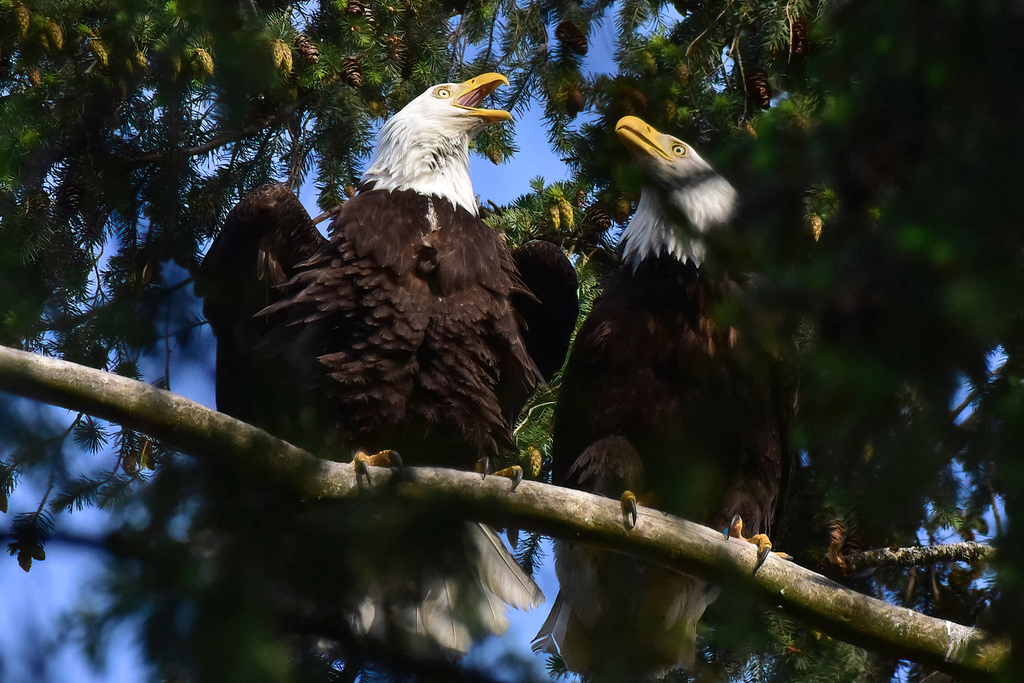
Bald Eagle
Haliaeetus leucocephalus
Birdstrong against fish, reptiles
Common
Swoop
While active with another bird in play, it hits 6 harder on its first attack after entering play (12 with two others).
30

29
Bald Eagle
Haliaeetus leucocephalus
Birdstrong against fish, reptiles
Common
While active with another bird in play, it hits 6 harder on its first attack after entering play (12 with two others).
Haliaeetus leucocephalus
Photo: © Marcel_Pepin (original photo) · CC BY 4.0 (licence text) · cropped
Strong against: it deals 20% more damage to them. Weak against: these types deal 20% more damage to it.
The bald eagle (Haliaeetus leucocephalus) is a bird of prey found in North America. A sea eagle, it has two known subspecies and forms a species pair with the white-tailed eagle (Haliaeetus albicilla), which occupies the same niche as the bald eagle in the Palearctic. Its range includes most of Canada and Alaska, all of the contiguous United States, and northern Mexico. It is found near large bodies of open water with an abundant food supply and old-growth trees for nesting.
The bald eagle is an opportunistic feeder that subsists mainly on fish, upon which it swoops down and snatches from the water with its talons. It builds the largest nest of any North American bird and the largest tree nests ever recorded for any animal species, up to 4 m (13 ft) deep, 2.5 m (8.2 ft) wide, and 1 metric ton (1.1 short tons) in weight. Sexual maturity is attained at the age of four to five years.
Bald eagles are not bald in the literal sense; the name derives from an older meaning of the word, "white-headed". The adult is mainly brown with a white head and tail. The sexes are identical in plumage, but females are about 25% larger than males. The yellow beak is large and hooked. The plumage of the immature is brown.
Abridged excerpt from the Wikipedia article Bald eagle, by its authors, under the CC BY-SA 4.0 licence.
Least Concern on the IUCN Red List: that’s what makes this card Common.
Every Common card has 100 points, shared between HP, ATK and DEF:
How they’re shared out:

 DEF 29