 …
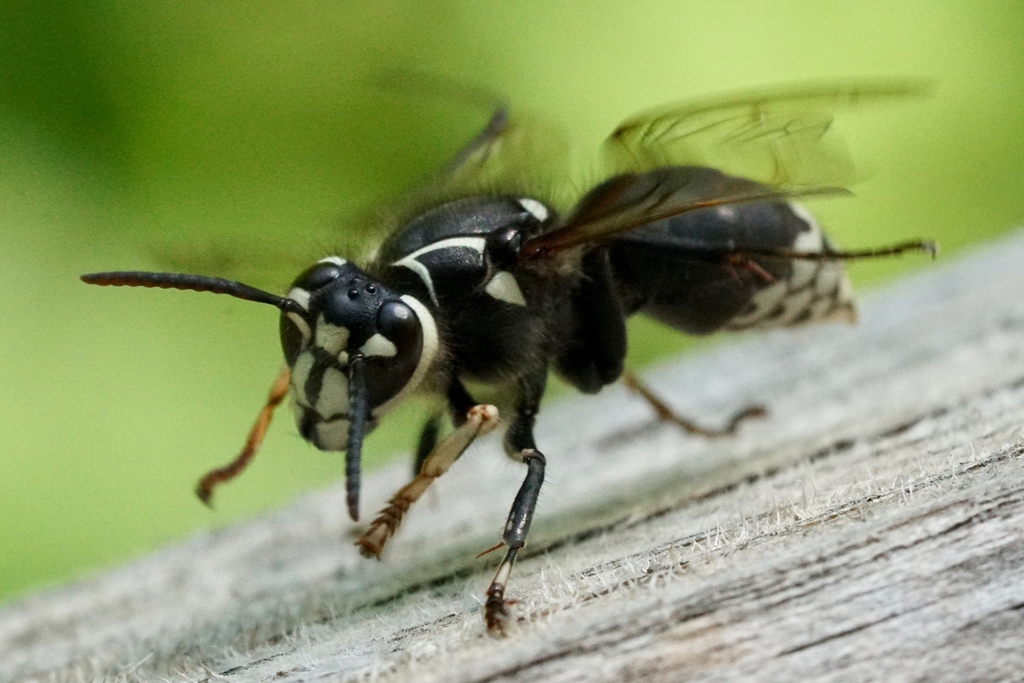
Bald-faced Hornet
Dolichovespula maculata
Insectstrong against fungi, fish
Common
Swarm
While active with another insect in play, each of its attacks also hits the opposing bench for 10, without knocking them out (20 with two others).
32

39
Bald-faced Hornet
Dolichovespula maculata
Insectstrong against fungi, fish
Common
While active with another insect in play, each of its attacks also hits the opposing bench for 10, without knocking them out (20 with two others).
Dolichovespula maculata
Photo: © Amy Schnebelin (original photo) · CC BY 4.0 (licence text) · cropped
Strong against: it deals 20% more damage to them. Weak against: these types deal 20% more damage to it.
Dolichovespula maculata is a species of wasp in the genus Dolichovespula and a member of the eusocial, cosmopolitan family Vespidae. It is taxonomically an aerial yellowjacket but is known by many colloquial names, primarily bald-faced hornet, but also including bald-faced aerial yellowjacket, bald-faced wasp, bald hornet, white-faced hornet, blackjacket, white-tailed hornet, spruce wasp, naked brink, and bull wasp. Technically a species of yellowjacket wasp, it is not one of the true hornets, which are in the genus Vespa. Colonies contain 400 to 700 workers, the largest recorded colony size in its genus, Dolichovespula. It builds a characteristic large hanging paper nest up to 58 cm (23 in) in length. Workers aggressively defend their nest by repeatedly stinging invaders.
The bald-faced hornet is distributed throughout the United States and Canada, but is most common in the Southeastern United States. Males in this species are haploid and females are diploid. Worker females can, therefore, lay eggs that develop into males.
Excerpt from the Wikipedia article Dolichovespula maculata, by its authors, under the CC BY-SA 4.0 licence.
No global status on the IUCN Red List: that’s what makes this card Common.
Every Common card has 100 points, shared between HP, ATK and DEF:
How they’re shared out:

 DEF 39