 …
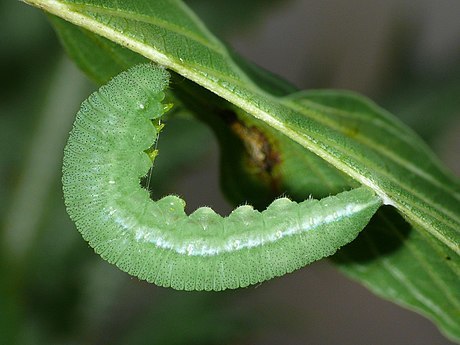
Common Brimstone
Gonepteryx rhamni
Insectstrong against fungi, fish
Common
Swarm
While active with another insect in play, each of its attacks also hits the opposing bench for 10, without knocking them out (20 with two others).
42

37
Common Brimstone
Gonepteryx rhamni
Insectstrong against fungi, fish
Common
While active with another insect in play, each of its attacks also hits the opposing bench for 10, without knocking them out (20 with two others).
Gonepteryx rhamni
Photo: © Harald Süpfle (original photo) · CC BY-SA 4.0 (licence text) · cropped
Strong against: it deals 20% more damage to them. Weak against: these types deal 20% more damage to it.
Gonepteryx rhamni, commonly named the Common Brimstone, is a butterfly of the family Pieridae. It lives throughout the Palearctic zone and is commonly found across Europe, Asia, and North Africa. Across much of its range, it is the only species of its genus, and is therefore simply known locally as the Brimstone. Its wing span size is 60–74 mm (2.4–2.9 in). It should not be confused with the Brimstone moth Opisthograptis luteolata.
The brimstone relies on two species of buckthorn plants as host plants for its larvae; this influences its geographic range and distribution, as these plants are commonly found in wetlands. The adult brimstone travels to woodland areas to spend seven months overwintering. In spring when their host plants have developed, they return to the wetlands to breed and lay eggs. Both the larval and adult forms of the common brimstone have protective coloration and behaviour that decreases their chances of being recognised and subsequently preyed upon.
The adult common brimstone has sexual dimorphism in its wing coloration: males have yellow wings and iridescence while females have greenish-white wings and are not iridescent. This iridescence is affected by environmental factors.
The name "butterfly" is believed to have originated from this species, which was called the "butter-coloured fly" by early British naturalists.
Excerpt from the Wikipedia article Gonepteryx rhamni, by its authors, under the CC BY-SA 4.0 licence.
No global status on the IUCN Red List: that’s what makes this card Common.
Every Common card has 100 points, shared between HP, ATK and DEF:
How they’re shared out:

 DEF 37