
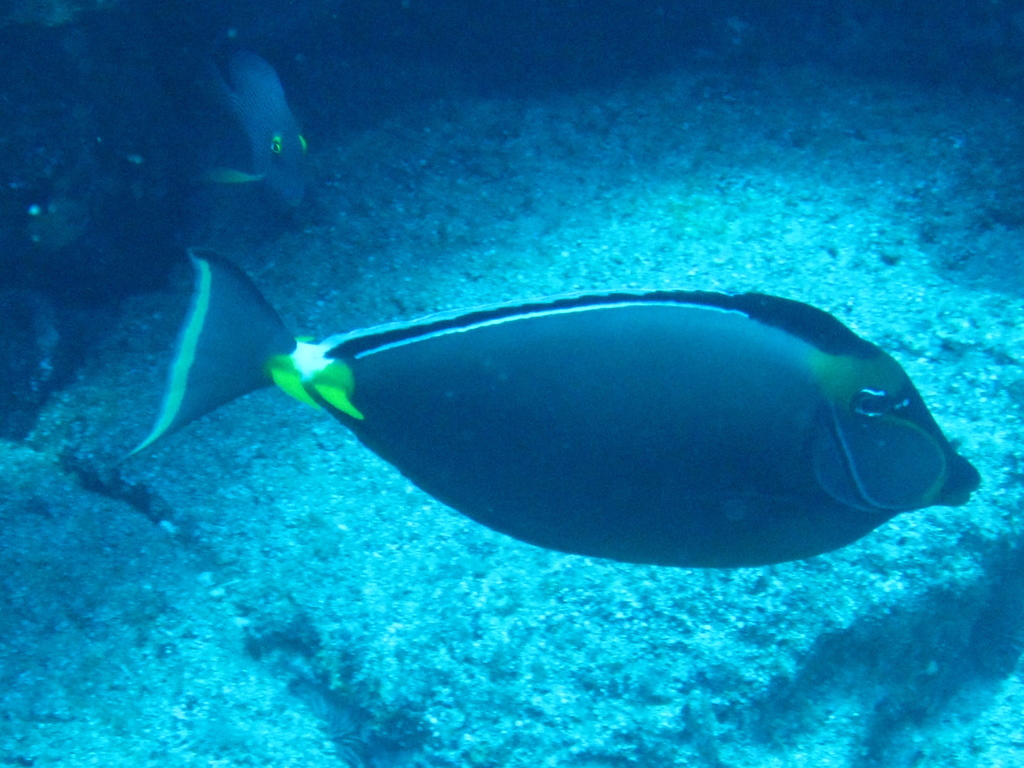
Pacific Orange-spine Unicornfish
Naso lituratus
Fishstrong against mammals, arachnids
Common
While active with another fish in play, a fish on your bench absorbs up to 9 of the damage this card takes, without being knocked out (18 with two others).

Pacific Orange-spine Unicornfish
Naso lituratus
Fishstrong against mammals, arachnids
Common
While active with another fish in play, a fish on your bench absorbs up to 9 of the damage this card takes, without being knocked out (18 with two others).
Naso lituratus
Photo: © Robert Webster (original photo) · CC BY-SA 4.0 (licence text) · cropped
Strong against: it deals 20% more damage to them. Weak against: these types deal 20% more damage to it.
Naso lituratus, also known as the clown unicornfish, orangespined unicornfish, orangespine unicornfish, black-finned unicornfish, Pacific orangespined unicornfish, blackfinned unicornfish or the stripefaced unicornfish, is a species of marine ray-finned fish belonging to the family Acanthuridae, which includes the surgeonfishes, unicornfishes and tangs. It is native to the eastern Indian Ocean and western Pacific Ocean, where it is found in coral reefs, often in pairs.
Naso lituratus is easily identified by two bright orange forward-hooked spines on the caudal peduncle (the tail base), as well as its orange lips and black face mask. The body is brownish grey with a yellow nape and a broad black band on the dorsal fin. It reaches about 45 cm (18 in) in length.
Unique to members of Acanthuridae, including Naso lituratus, are the Epulopiscium bacteria. These bacteria aid the fishes' digestion, helping them process the algae in their diet.
Excerpt from the Wikipedia article Naso lituratus, by its authors, under the CC BY-SA 4.0 licence.
Least Concern on the IUCN Red List: that’s what makes this card Common.
Every Common card has 100 points, shared between HP, ATK and DEF:
How they’re shared out:

