 …
Rice Leaf-roller
Cnaphalocrocis medinalis
Insectstrong against fungi, fish
Common
Swarm
While active with another insect in play, each of its attacks also hits the opposing bench for 10, without knocking them out (20 with two others).
40

38
Rice Leaf-roller
Cnaphalocrocis medinalis
Insectstrong against fungi, fish
Common
While active with another insect in play, each of its attacks also hits the opposing bench for 10, without knocking them out (20 with two others).
Cnaphalocrocis medinalis
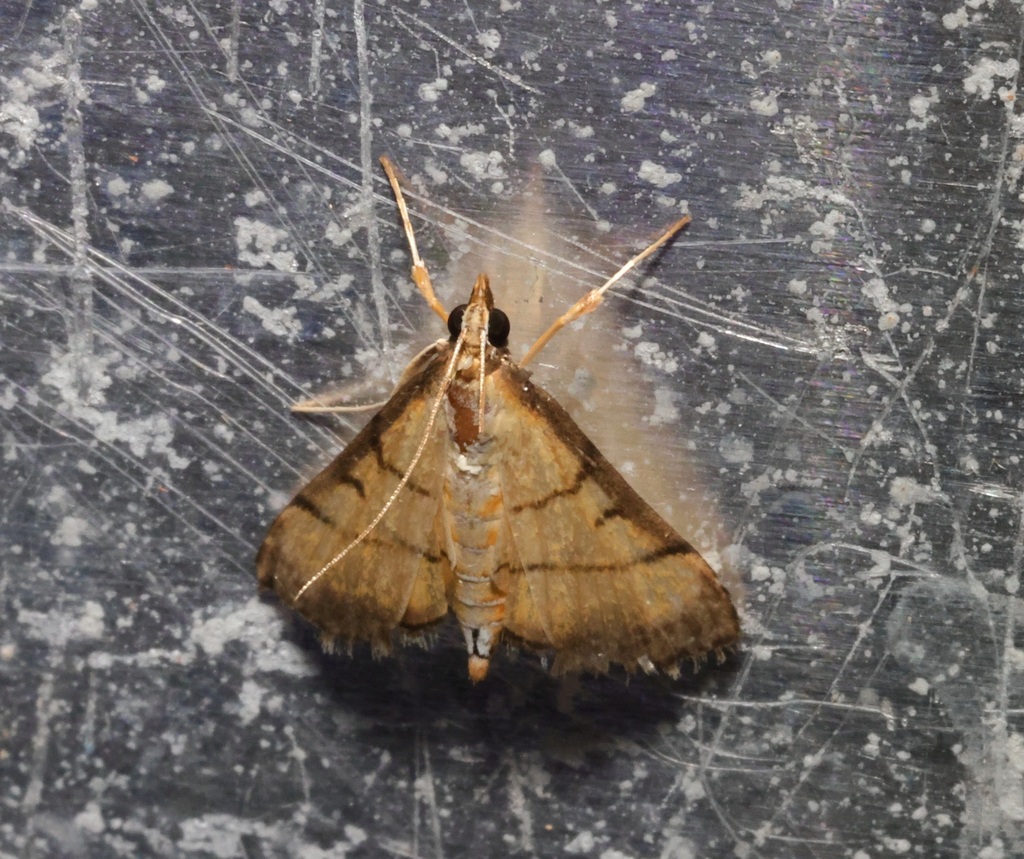
Photo: © sk2 (original photo) · CC BY-SA 4.0 (licence text) · cropped
Strong against: it deals 20% more damage to them. Weak against: these types deal 20% more damage to it.
Cnaphalocrocis medinalis, the rice leafroller, is a species of moth of the family Crambidae. It is found in south-east Asia, including Hong Kong, Sri Lanka, Taiwan, Thailand and most of Australia.
This moth typically has a wingspan of approximately 16 millimeters.
Its larvae are recognized as pests of various crops, including Oryza sativa, Zea mays, and Triticum, Saccharum and Sorghum species.
The adult moth is characterized by its vibrant yellow or straw coloration, with distinct wavy lines visible on its forewings and hindwings. Eggs are usually laid individually or in groups on the undersides of leaves, appearing scaly and white. A female moth can lay around 56 eggs, with an incubation period lasting between 4 and 8 days. Larvae go through 5 to 6 instars over a period of approximately 22 to 23 days before pupating within folded leaves for about 6 to 7 days. Fully grown caterpillars are green and measure around 16.5 millimeters in length. The entire life cycle of this moth spans about 5 weeks.
Abridged excerpt from the Wikipedia article Cnaphalocrocis medinalis, by its authors, under the CC BY-SA 4.0 licence.
No global status on the IUCN Red List: that’s what makes this card Common.
Every Common card has 100 points, shared between HP, ATK and DEF:
How they’re shared out:

 DEF 38