 …
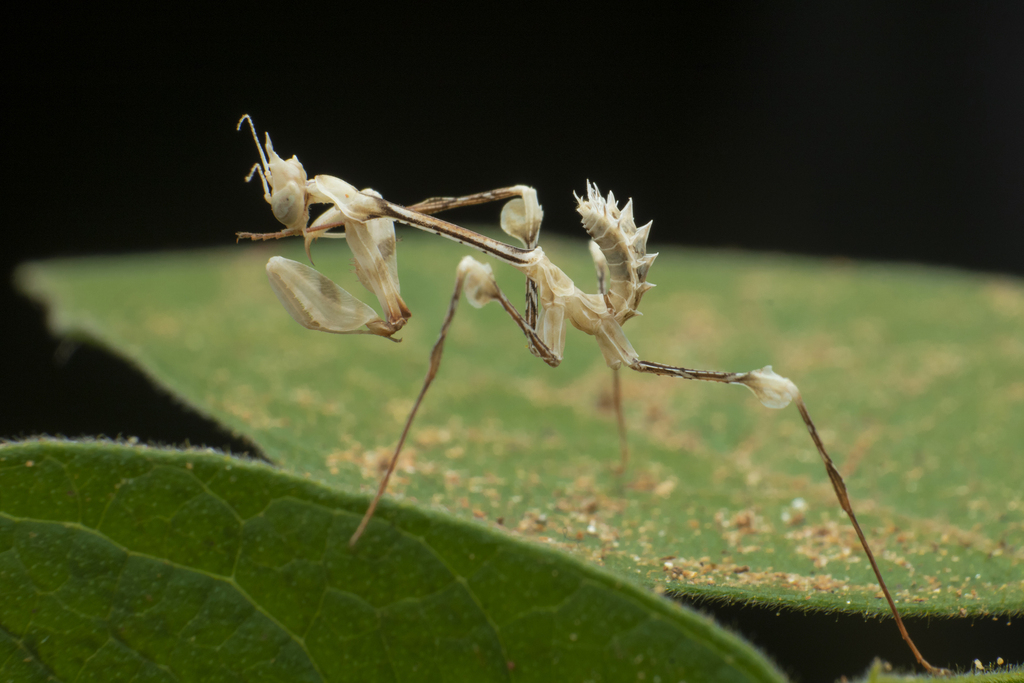
Wandering Violin Mantis
Gongylus gongylodes
Insectstrong against fungi, fish
Common
Swarm
While active with another insect in play, each of its attacks also hits the opposing bench for 10, without knocking them out (20 with two others).
30

36
Wandering Violin Mantis
Gongylus gongylodes
Insectstrong against fungi, fish
Common
While active with another insect in play, each of its attacks also hits the opposing bench for 10, without knocking them out (20 with two others).
Gongylus gongylodes
Photo: © @dineshphotography7797 (original photo) · CC BY 4.0 (licence text) · cropped
Strong against: it deals 20% more damage to them. Weak against: these types deal 20% more damage to it.
Gongylus gongylodes, also known as the wandering violin mantis, ornate mantis, or Indian rose mantis, is a species of praying mantis in the family Empusidae. Characterized by extremely slender limbs with large appendages, it is not a particularly aggressive species and often kept as a pet. The mantis is especially known for swaying its body back and forth to imitate a stick flowing in the wind.
It primarily feeds on flying insects. Its native range is in southern India and Sri Lanka. It can reach up to 11 cm (4.3 in) long. The males of the species are capable of flight. They are a communal species, in that they are able to live and breed in large groups, without unnecessary cannibalism.
Adult females are about 10cm (3 in) and adult males are about 9 cm.
Its specific name gongylodes means "roundish" in Greek, from the same word as its generic epithet Gongylus.
Excerpt from the Wikipedia article Gongylus gongylodes, by its authors, under the CC BY-SA 4.0 licence.
No global status on the IUCN Red List: that’s what makes this card Common.
Every Common card has 100 points, shared between HP, ATK and DEF:
How they’re shared out:

 DEF 36