 …
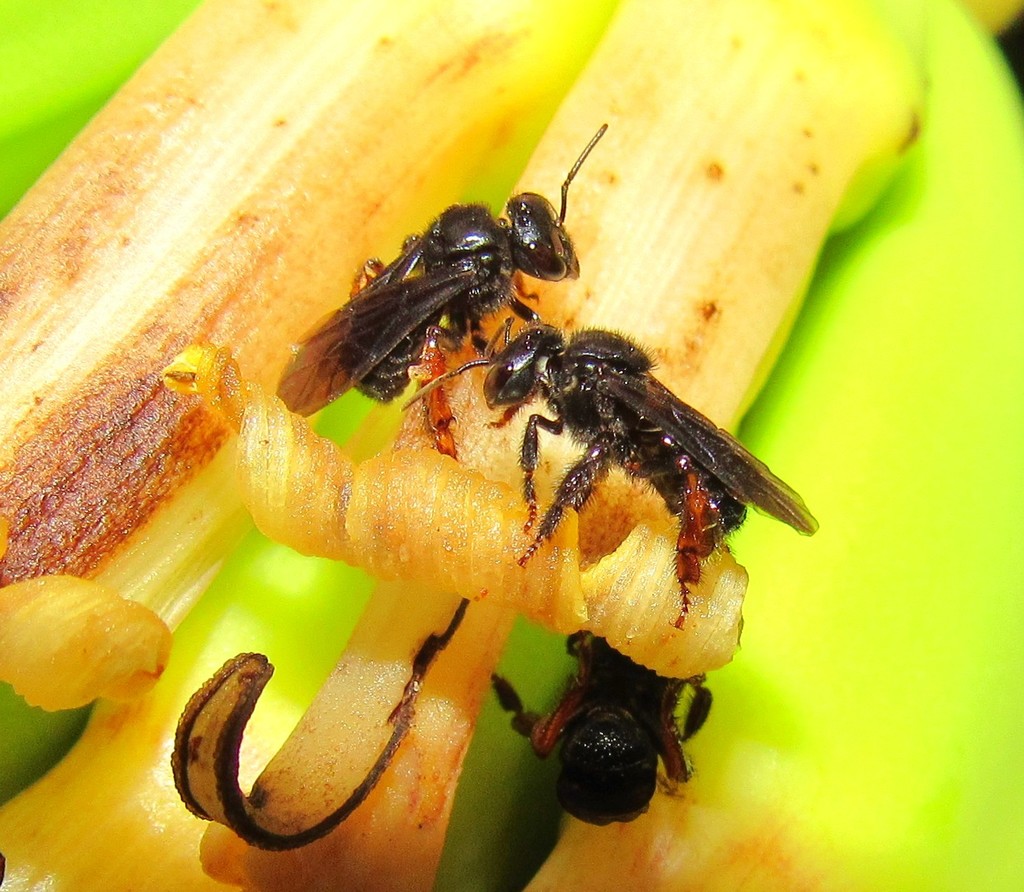
Spiny-legged Stingless bee
Trigona spinipes
Insectstrong against fungi, fish
Common
Swarm
While active with another insect in play, each of its attacks also hits the opposing bench for 10, without knocking them out (20 with two others).
40

38
Spiny-legged Stingless bee
Trigona spinipes
Insectstrong against fungi, fish
Common
While active with another insect in play, each of its attacks also hits the opposing bench for 10, without knocking them out (20 with two others).
Trigona spinipes
Photo: Kahio Tiberio Mazon (original photo) · CC0 (licence text) · cropped
Strong against: it deals 20% more damage to them. Weak against: these types deal 20% more damage to it.
Trigona spinipes is a species of stingless bee. It occurs in Brazil, where it is called arapuá, aripuá, irapuá, japurá or abelha-cachorro ("dog-bee"). The species name means "spiny feet" in Latin. Trigona spinipes builds its nest on trees (or on buildings and other human structures), out of mud, resin, wax, and assorted debris, including dung. Therefore, its honey is not fit for consumption, even though it is reputed to be of good quality by itself, and is used in folk medicine. Colonies may have from 5,000 to over 100,000 workers.
T. spinipes will attack in swarms when they feel the nest is threatened. They cannot sting, and their bite is not very effective. Their main weapon against predatory animals, including human beings, is to entangle themselves in the victim's hair and buzz loudly. They will also aggressively penetrate human bodily openings such as nasal and auditory orifices when in attack mode.
T. spinipes uses odor trails, sometimes extending several hundred metres, in order to lead nestmates from the hive to a food source. Moreover, it can "eavesdrop" on chemical signals used by other bee species (such as carpenter bees, Africanized honeybees and other stingless bees) for the same purpose, killing them or driving them away to take over their food source.
Abridged excerpt from the Wikipedia article Trigona spinipes, by its authors, under the CC BY-SA 4.0 licence.
No global status on the IUCN Red List: that’s what makes this card Common.
Every Common card has 100 points, shared between HP, ATK and DEF:
How they’re shared out:

 DEF 38