 …
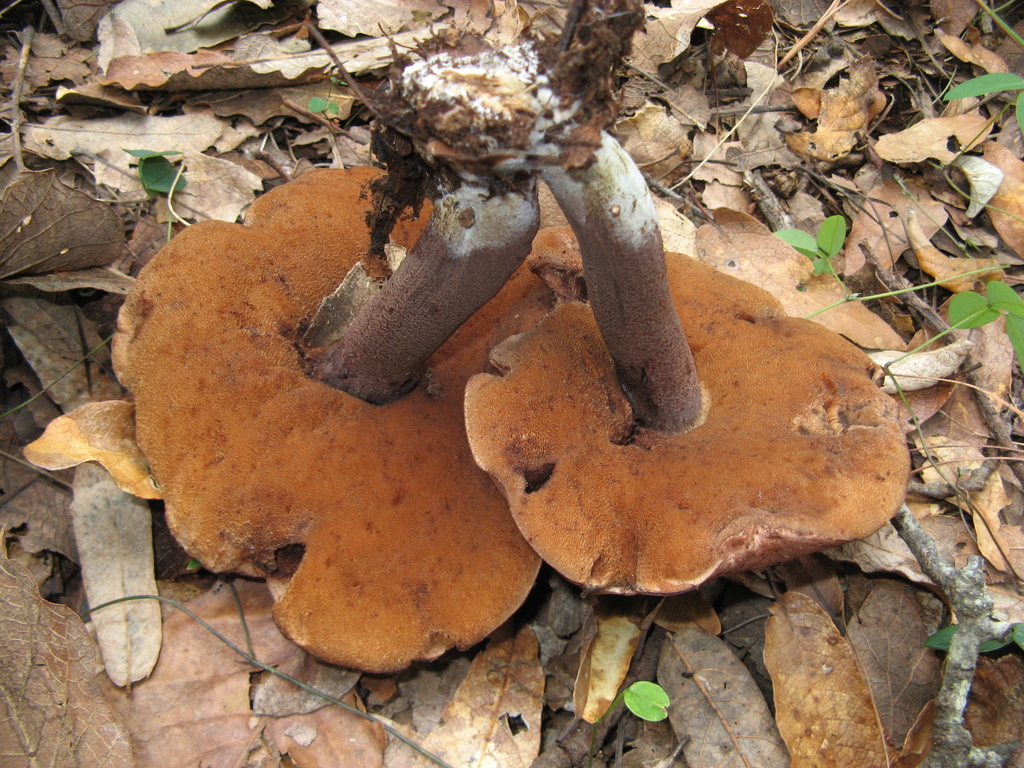
Lilac-brown bolete
Sutorius eximius
Fungusstrong against amphibians, reptiles
Common
Mycelium
While active with another fungus in play, it regains 5 HP at the start of your turn (8 with two others).
38

28
Lilac-brown bolete
Sutorius eximius
Fungusstrong against amphibians, reptiles
Common
While active with another fungus in play, it regains 5 HP at the start of your turn (8 with two others).
Sutorius eximius
Photo: © Alan Rockefeller (original photo) · CC BY 4.0 (licence text) · cropped
Strong against: it deals 20% more damage to them. Weak against: these types deal 20% more damage to it.
Sutorius eximius, commonly known as the lilac-brown bolete, is a species of fungus in the family Boletaceae. Originally described in 1874 as a species of Boletus, the fungus has also been classified in the genus Leccinum because of the scabers on the stipe, or in Tylopilus because of the color of the spore print. Molecular genetic analysis revealed that the lilac-brown bolete was separate from both of these genera, and merited placement in a new genus. Sutorius was created to contain this bolete and the closely related Australian species S. australiensis.
This bolete produces fruit bodies that are dark purple to chocolate brown in color with a smooth cap, a finely scaly stipe, and a reddish-brown spore print. The tiny pores on the cap underside are chocolate to violet brown. It is widely distributed, having been recorded on North America, South America, and Asia, where it grows in a mycorrhizal relationship with both coniferous and deciduous trees.
Excerpt from the Wikipedia article Sutorius eximius, by its authors, under the CC BY-SA 4.0 licence.
No global status on the IUCN Red List: that’s what makes this card Common.
Every Common card has 100 points, shared between HP, ATK and DEF:
How they’re shared out:

 DEF 28