 …
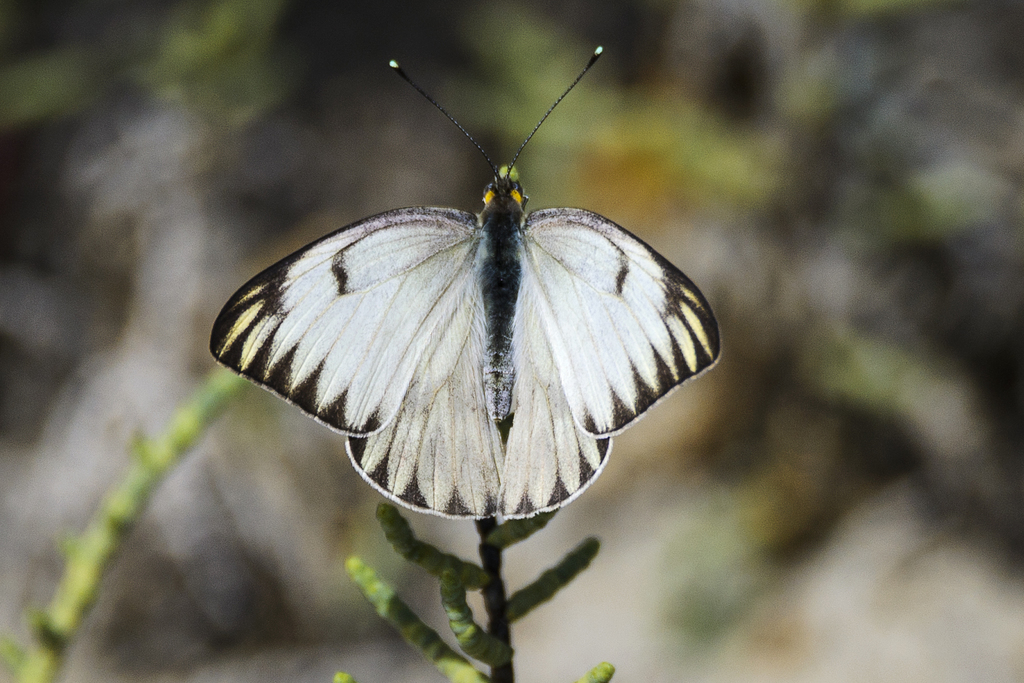
Great Southern White
Ascia monuste
Insectstrong against fungi, fish
Common
Swarm
While active with another insect in play, each of its attacks also hits the opposing bench for 10, without knocking them out (20 with two others).
39

40
Great Southern White
Ascia monuste
Insectstrong against fungi, fish
Common
While active with another insect in play, each of its attacks also hits the opposing bench for 10, without knocking them out (20 with two others).
Ascia monuste
Photo: © Alan Rockefeller (original photo) · CC BY 4.0 (licence text) · cropped
Strong against: it deals 20% more damage to them. Weak against: these types deal 20% more damage to it.
Ascia is a genus of butterflies in the family Pieridae. It is monotypic, being represented by the single species Ascia monuste, commonly known as the great southern white, In this species the sexes may differ with the female being either light or dark colored. It is found from the Atlantic and Gulf coasts of the United States, and south to Argentina. It is migratory along the south-eastern coast of the United States, with strays to Maryland, Kansas, and Colorado.
Larvae have distinct body segments within which there appears to be four to six subsegments. They are purplish-green with two longitudinal, greenish-yellow stripes on each side and the dorsal side. When full-grown, they are approximately one and a quarter inches long. The wingspan in adults is 63–86 mm (2.5–3.4 in). Adults are on wing all year round in southern Texas, peninsular Florida and along the Gulf Coast.
A. monuste is a migrating species that moves in one direction within its life span and does not return. It breeds in Florida but sometimes migrates along the coast up to 160 km (99 mi) to breed in more suitable areas.
Excerpt from the Wikipedia article Ascia, by its authors, under the CC BY-SA 4.0 licence.
No global status on the IUCN Red List: that’s what makes this card Common.
Every Common card has 100 points, shared between HP, ATK and DEF:
How they’re shared out:

 DEF 40