 …
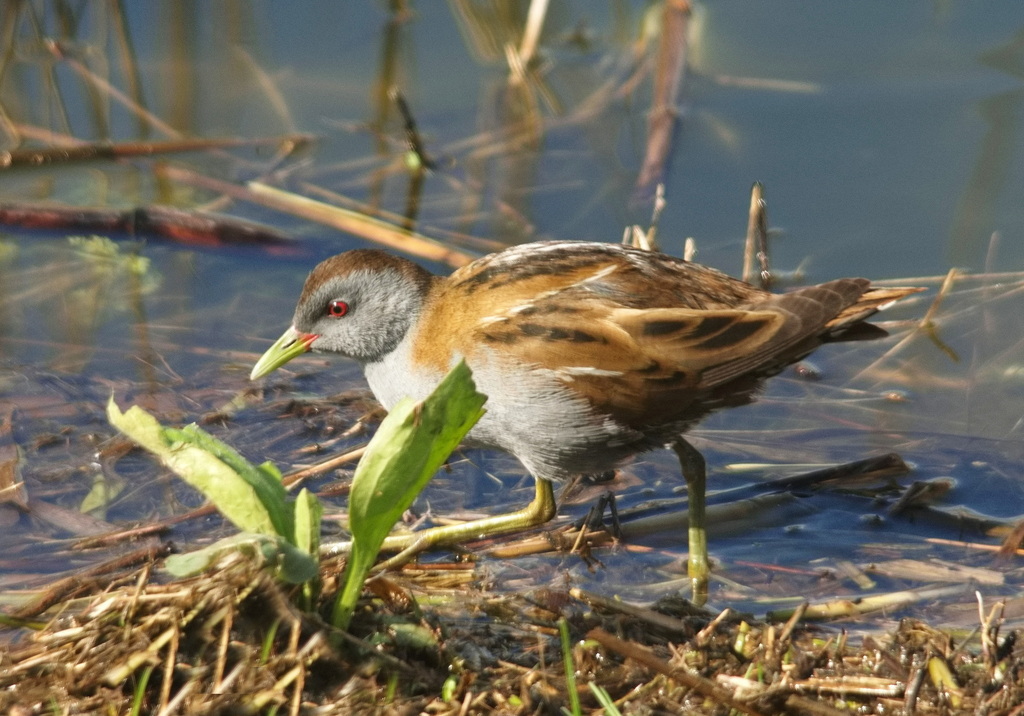
Little Crake
Zapornia parva
Birdstrong against fish, reptiles
Common
Swoop
While active with another bird in play, it hits 6 harder on its first attack after entering play (12 with two others).
31

38
Little Crake
Zapornia parva
Birdstrong against fish, reptiles
Common
While active with another bird in play, it hits 6 harder on its first attack after entering play (12 with two others).
Zapornia parva
Photo: © SIA (original photo) · CC BY 4.0 (licence text) · cropped
Strong against: it deals 20% more damage to them. Weak against: these types deal 20% more damage to it.
The little crake (Zapornia parva) is a very small waterbird of the family Rallidae. parva is Latin for "small". This species was long included in the genus Porzana.
Its breeding habitat is reed beds in Europe, mainly in the east, and just into western Asia. This species is migratory, wintering in Africa.
At 17–19 cm (6.7–7.5 in) in length, they are slightly smaller than the spotted crake, from which they are readily distinguished by the lack of dark barring and white spots on the flanks. The little crake has a short straight bill, yellow with a red base. They have green legs with long toes, and a short tail which is barred black and white underneath. Unlike other Zapornia crakes, this species has strong sexual dimorphism: Adult males have mainly brown upperparts and blue-grey face and underparts. They resemble the sympatric Baillon's crake (Z. pusilla), which has strongly barred flanks and is a little smaller. Females have buff underparts, and are grey only on the face; they are more similar to the yellow-breasted crake (Z. flaviventer) of the American tropics. Immature little crakes are similar to the female but have a white face and breast. The downy chicks are black, as with all rails.
Abridged excerpt from the Wikipedia article Little crake, by its authors, under the CC BY-SA 4.0 licence.
Least Concern on the IUCN Red List: that’s what makes this card Common.
Every Common card has 100 points, shared between HP, ATK and DEF:
How they’re shared out:

 DEF 38