 …
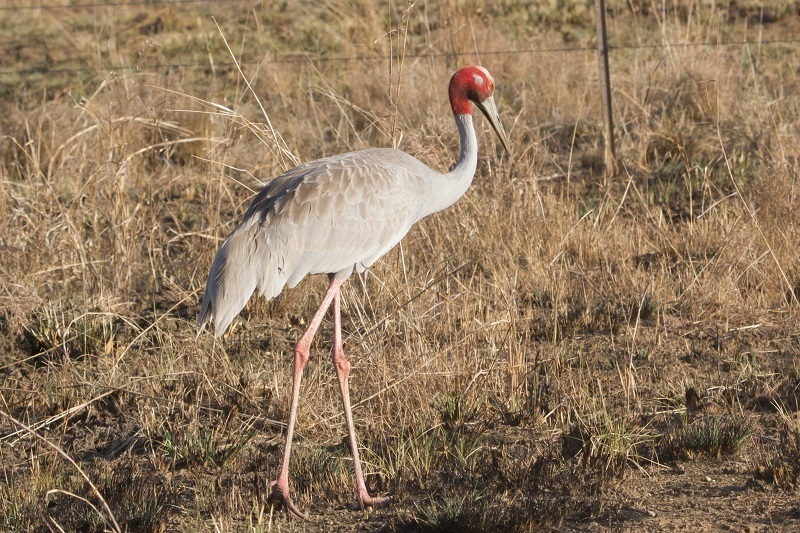
Sarus Crane
Antigone antigone
Birdstrong against fish, reptiles
Rare
Swoop
While active with another bird in play, it hits 6 harder on its first attack after entering play (12 with two others).
39

43
Sarus Crane
Antigone antigone
Birdstrong against fish, reptiles
Rare
While active with another bird in play, it hits 6 harder on its first attack after entering play (12 with two others).
Antigone antigone
Photo: © dhfischer (original photo) · CC BY 4.0 (licence text) · cropped
Strong against: it deals 20% more damage to them. Weak against: these types deal 20% more damage to it.
The sarus crane (Antigone antigone) is a large nonmigratory crane found in parts of the Indian subcontinent, Southeast Asia, and northern Australia. The tallest of the flying birds, standing at a height of up to 1.8 m (5 ft 11 in), they are a conspicuous species of open wetlands in South Asia, seasonally flooded Dipterocarpus forests in Southeast Asia, and Eucalyptus-dominated woodlands and grasslands in Australia.
The sarus crane is easily distinguished from other cranes in the region by its overall grey colour and the contrasting red head and upper neck. They forage on marshes and shallow wetlands for roots, tubers, insects, crustaceans, and small vertebrate prey. Like other cranes, they form long-lasting pair bonds and maintain territories within which they perform territorial and courtship displays that include loud trumpeting, leaps, and dance-like movements. In India, they are considered symbols of marital fidelity, believed to mate for life and pine the loss of their mates, even to the point of starving to death.
Abridged excerpt from the Wikipedia article Sarus crane, by its authors, under the CC BY-SA 4.0 licence.
Vulnerable on the IUCN Red List: that’s what makes this card Rare.
Every Rare card has 130 points, shared between HP, ATK and DEF:
How they’re shared out:

 DEF 43