 …
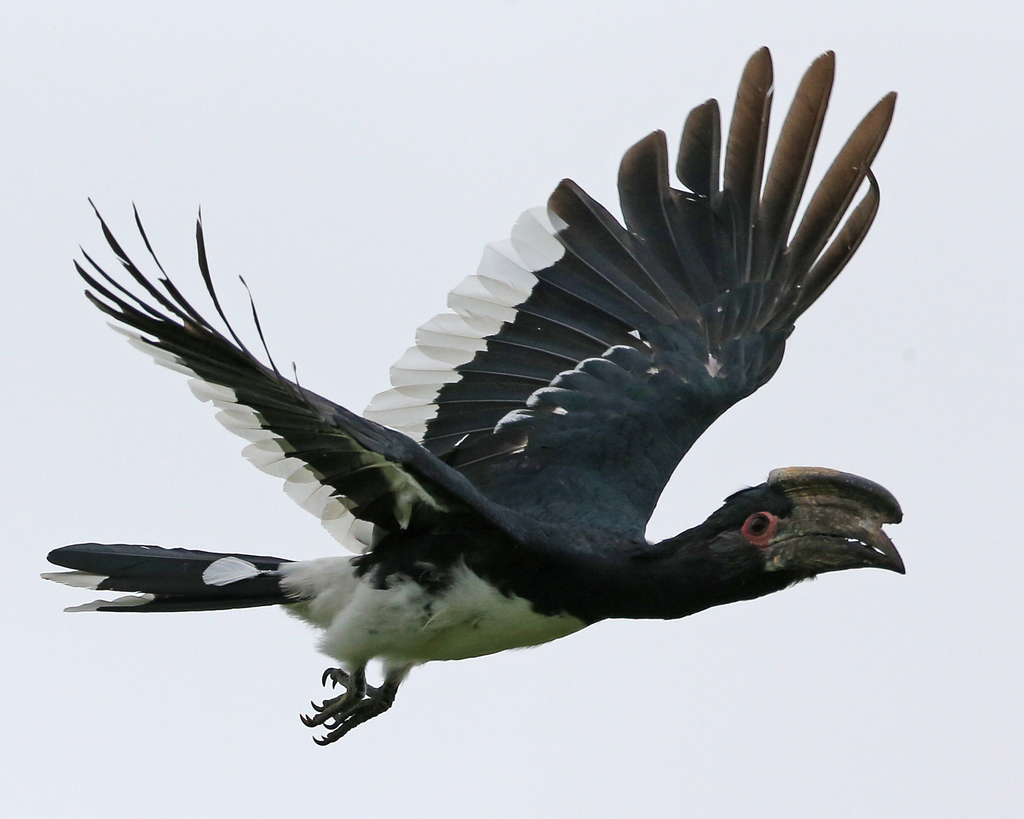
Trumpeter Hornbill
Bycanistes bucinator
Birdstrong against fish, reptiles
Common
Swoop
While active with another bird in play, it hits 6 harder on its first attack after entering play (12 with two others).
39

37
Trumpeter Hornbill
Bycanistes bucinator
Birdstrong against fish, reptiles
Common
While active with another bird in play, it hits 6 harder on its first attack after entering play (12 with two others).
Bycanistes bucinator
Photo: © Lip Kee (original photo) · CC BY-SA 4.0 (licence text) · cropped
Strong against: it deals 20% more damage to them. Weak against: these types deal 20% more damage to it.
The trumpeter hornbill (Bycanistes bucinator) is a medium-sized hornbill, with length between 58 and 65 cm (23 and 26 in), characterized by a large grey casque on the bill, smaller in females. The eyes are brown or red, with pink surrounding skin. Body mass is between 0.45 and 1 kg (0.99 and 2.20 lb). It is similar to silvery-cheeked hornbill. Distinguishing features include an all-black back, white belly and white underwing coverts (in flight, wings present white tips), and red facial skin.
The trumpeter hornbill is a gregarious bird, usually living in groups of two to five individuals, although sometimes as many as fifty. This hornbill is a locally common resident of the tropical evergreen forests of Burundi, Mozambique, Botswana, Congo, North Pare Mountains of Tanzania, Kenya, the Caprivi strip of Namibia and eastern South Africa, where it feeds on fruits and large insects. Like other hornbills, the females incubate four to five white eggs while sealed in the nest compartment.
Excerpt from the Wikipedia article Trumpeter hornbill, by its authors, under the CC BY-SA 4.0 licence.
Least Concern on the IUCN Red List: that’s what makes this card Common.
Every Common card has 100 points, shared between HP, ATK and DEF:
How they’re shared out:

 DEF 37