 …
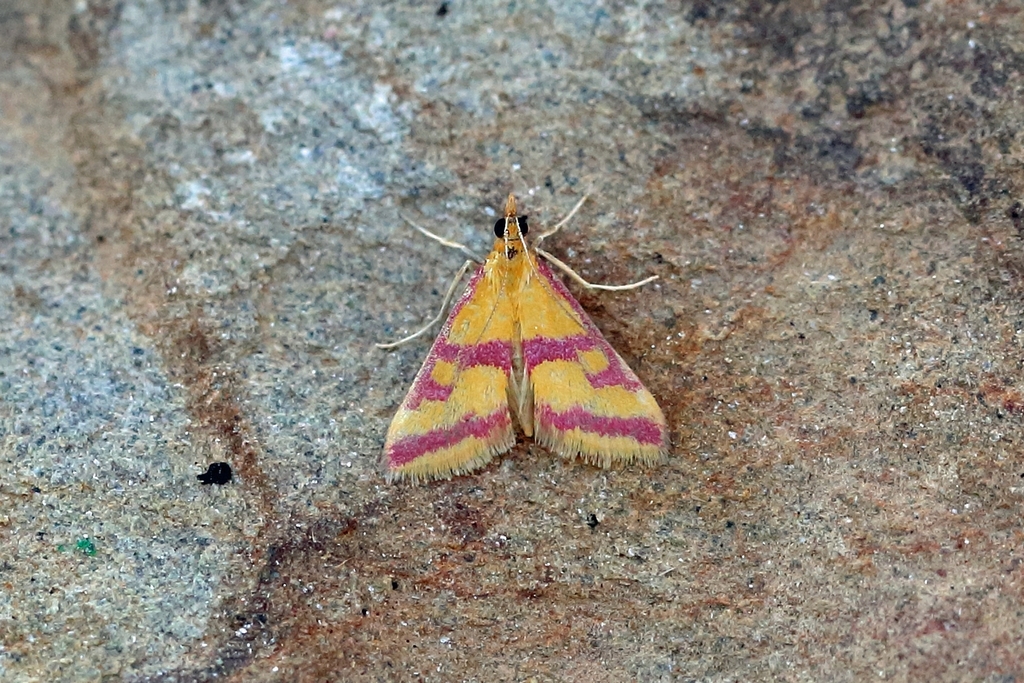
Scarce Crimson and Gold
Pyrausta sanguinalis
Insectstrong against fungi, fish
Common
Swarm
While active with another insect in play, each of its attacks also hits the opposing bench for 10, without knocking them out (20 with two others).
39

40
Scarce Crimson and Gold
Pyrausta sanguinalis
Insectstrong against fungi, fish
Common
While active with another insect in play, each of its attacks also hits the opposing bench for 10, without knocking them out (20 with two others).
Pyrausta sanguinalis
Photo: © Nigel Voaden (original photo) · CC BY 4.0 (licence text) · cropped
Strong against: it deals 20% more damage to them. Weak against: these types deal 20% more damage to it.
Pyrausta sanguinalis, the scarce crimson and gold, is a moth of the family Crambidae. The species was first described by Carl Linnaeus in his 1767 12th edition of Systema Naturae.
The wingspan is 14–18 mm. The forewings are brownish ochreous, basal and dorsal areas deep yellow, disc yellow mixed; markings purple-crimson; a streak along costa to 3/4; a fascia before middle; an oblong discal spot, connected above with costal streak, and sometimes beneath with preceding fascia; a subterminal fascia. Hindwings in male light grey, darker terminally, in female grey; termen crimson in middle. The larva is greenish-grey, reddish tinged; subdorsal and spiracular lines whitish; head brown.
The moth flies from June to August depending on the location.
The larvae feed on common sage, rosemary and thyme.
Excerpt from the Wikipedia article Pyrausta sanguinalis, by its authors, under the CC BY-SA 4.0 licence.
No global status on the IUCN Red List: that’s what makes this card Common.
Every Common card has 100 points, shared between HP, ATK and DEF:
How they’re shared out:

 DEF 40