 …
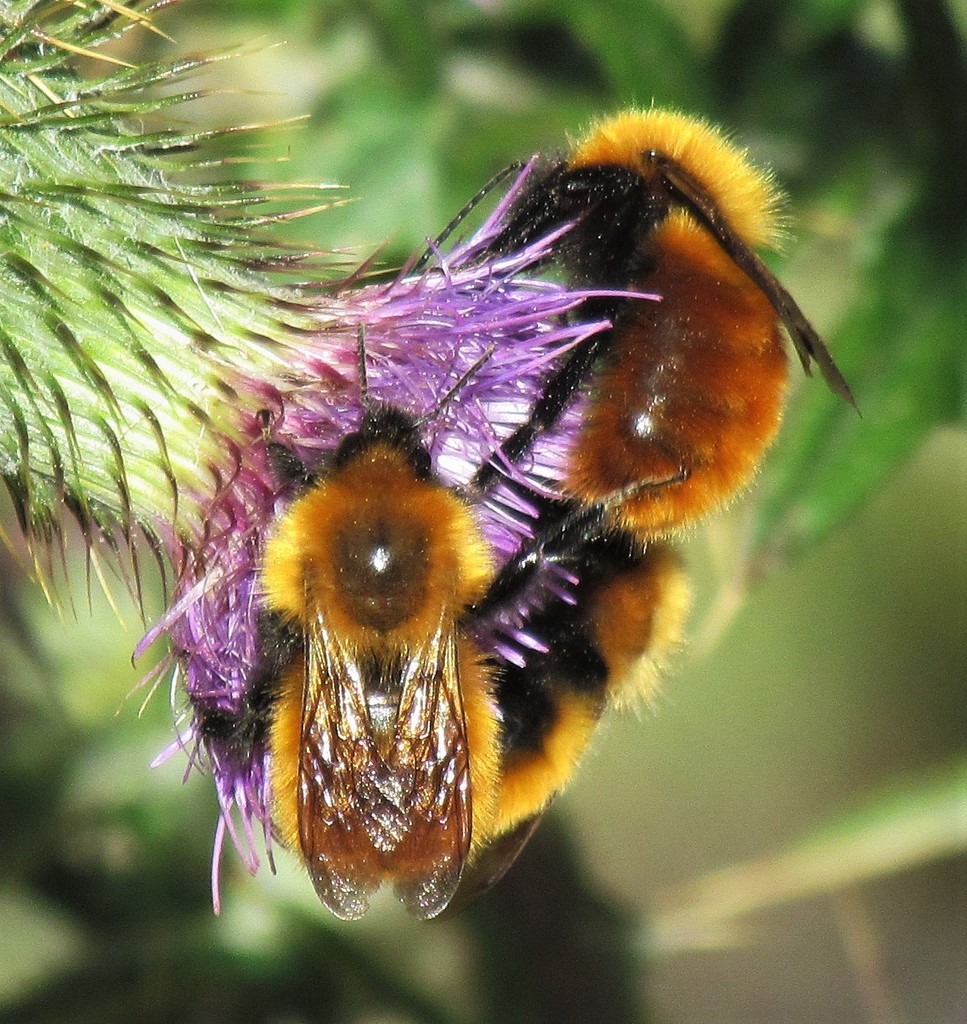
Giant Bumble Bee
Bombus dahlbomii
Insectstrong against fungi, fish
Epic
Swarm
While active with another insect in play, each of its attacks also hits the opposing bench for 10, without knocking them out (20 with two others).
58

55
Giant Bumble Bee
Bombus dahlbomii
Insectstrong against fungi, fish
Epic
While active with another insect in play, each of its attacks also hits the opposing bench for 10, without knocking them out (20 with two others).
Bombus dahlbomii
Photo: iNaturalist (original photo) · CC0 (licence text) · cropped
Strong against: it deals 20% more damage to them. Weak against: these types deal 20% more damage to it.
Bombus dahlbomii, also known as the moscardón (or mangangá, from Guarani: mamanga), is a species of bumblebee endemic to southern South American temperate forests. B. dahlbomii is one of the largest bee species in the world, with matured queens growing up to 40 mm (1.6 in) long. Because of its size and furry appearance, the species has been described as "flying mice" colloquially, and "a monstrous fluffy ginger beast" by British ecologist David Goulson.
B. dahlbomii is native to southern Chile and southern Argentina, including Patagonia. The decline of its populations started with the introduction of Bombus terrestris and B. ruderatus into Chile to serve as commercial pollinators. B. dahlbomii population decline can also be attributed to the pathogen spillover of the parasitic protozoan Apicystis bombi, which was co-introduced with B. terrestris.
B. dahlbomii is an important insect in local ecosystems, such as the Maulino forest of central Chile. There, it is a major pollinator of native plants such as Lapageria rosea and Alstroemeria aurea, both of which serve important commercial purposes.
Excerpt from the Wikipedia article Bombus dahlbomii, by its authors, under the CC BY-SA 4.0 licence.
Endangered on the IUCN Red List: that’s what makes this card Epic.
Every Epic card has 145 points, shared between HP, ATK and DEF:
How they’re shared out:

 DEF 55