 …
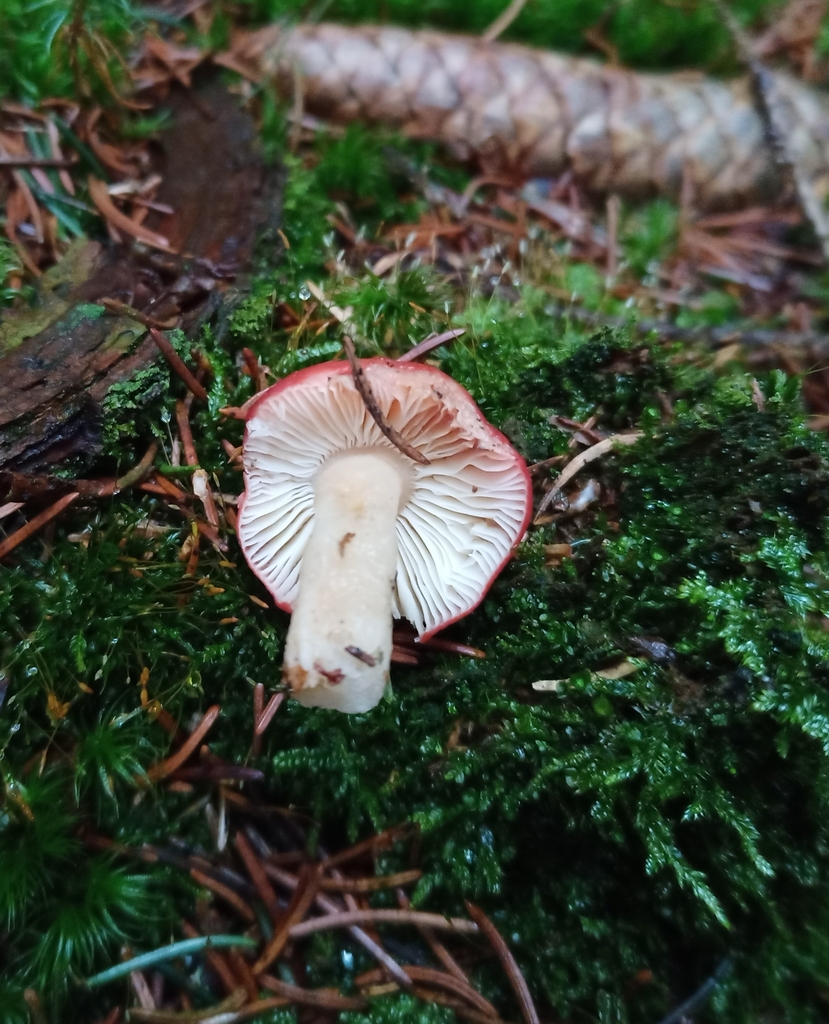
the sickener
Russula emetica
Fungusstrong against amphibians, reptiles
Common
Mycelium
While active with another fungus in play, it regains 5 HP at the start of your turn (8 with two others).
39

28
the sickener
Russula emetica
Fungusstrong against amphibians, reptiles
Common
While active with another fungus in play, it regains 5 HP at the start of your turn (8 with two others).
Russula emetica
Photo: © Michal Honskus (original photo) · CC BY 4.0 (licence text) · cropped
Strong against: it deals 20% more damage to them. Weak against: these types deal 20% more damage to it.
Russula emetica, commonly known as the sickener, emetic russula, or vomiting russula, is a basidiomycete mushroom, and the type species of the genus Russula. It was first described in 1774.
It has a red, convex to flat cap up to 8.5 cm (3.3 in) in diameter, with a cuticle that can be peeled off almost to the centre. The gills are white to pale cream, and closely spaced. A smooth white stem measures up to 10.5 cm (4.1 in) long and 2.4 cm (0.9 in) thick. There are many similar russulas with a red cap and white stem and gills, some of which can be reliably distinguished only by microscopy. The mushroom has a wide distribution in the Northern Hemisphere, where it grows on the ground in damp woodlands in a mycorrhizal association with conifers, especially pine.
The mushroom's common names refer to the gastrointestinal distress which it causes when consumed raw. The flesh is extremely peppery, but this offensive taste, along with its toxicity, can be removed by parboiling or pickling. Although it used to be widely eaten in Russia and eastern European countries, it is generally not recommended for consumption.
Excerpt from the Wikipedia article Russula emetica, by its authors, under the CC BY-SA 4.0 licence.
Least Concern on the IUCN Red List: that’s what makes this card Common.
Every Common card has 100 points, shared between HP, ATK and DEF:
How they’re shared out:

 DEF 28